

Why Is PVC Film Becoming the Preferred Surface Solution for Modern Manufacturing?
2026-02-11
Over the past few years, I have seen manufacturers across furniture, interior decoration, packaging, and industrial sectors steadily shift toward higher-performance surface materials. During this transition, Future Colors (Shandong) Material Technology Co., Ltd. gradually introduced advanced production lines and formulation upgrades that focus on one material in particular—PVC Film. From my perspective working closely with buyers and project managers, the reason is simple: customers want durability, consistency, cost control, and design flexibility all in one solution.
In this article, I will walk you through why PVC Film has become such a practical choice, what real pain points it solves, and how I evaluate its performance when selecting materials for demanding projects.
What Problems Do Buyers Face When Selecting Surface Materials?
When I talk to procurement managers and production supervisors, they often describe the same frustrations:
- Unstable quality between different batches
- Surface layers that peel, crack, or fade over time
- Limited design choices that restrict product creativity
- Rising raw material costs that hurt margins
- Environmental compliance concerns in export markets
Traditional veneers or low-grade plastic sheets may look acceptable at first, but after months of use, they can warp, discolor, or fail under humidity and heat. In competitive industries such as cabinetry, decorative panels, and packaging, that kind of inconsistency damages brand reputation.
This is exactly where high-quality PVC Film demonstrates its value.
How Does PVC Film Improve Product Durability in Real Applications?
One of the first things I evaluate is mechanical performance. A reliable PVC Film must withstand bending, stretching, and thermal forming without cracking. When properly formulated, it offers:
- Strong adhesion to MDF, particle board, metal, or plastic substrates
- Excellent resistance to moisture and humidity
- Scratch and abrasion resistance for high-traffic surfaces
- Stable color retention under indoor lighting exposure
For example, in kitchen cabinet production, I have seen how consistent film thickness and flexibility reduce edge lifting during vacuum pressing. That means fewer reworks and lower waste rates.
| Performance Factor | Typical Requirement | Benefit to Manufacturer |
| Thickness Consistency | Uniform micron-level control | Stable forming and reduced scrap rate |
| Tensile Strength | High elongation without cracking | Reliable vacuum pressing results |
| Heat Resistance | No deformation under processing temperature | Smoother production workflow |
| Color Fastness | Long-term visual stability | Lower warranty risk |
When these factors are controlled carefully, PVC Film becomes not just a decorative layer, but a structural contributor to product longevity.
Can PVC Film Balance Design Freedom and Production Efficiency?
Another challenge I frequently hear from designers is the trade-off between aesthetics and manufacturability. Natural materials look attractive, but they vary in texture and tone. That inconsistency complicates mass production.
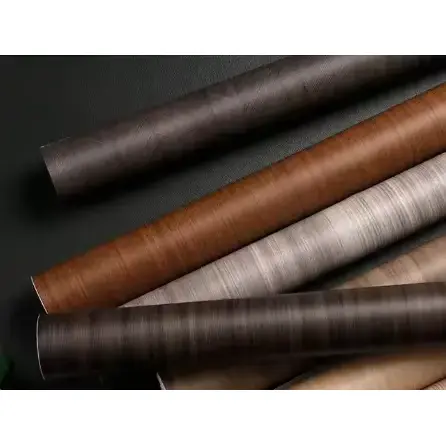
With advanced printing and embossing technology, PVC Film can replicate wood grain, marble textures, metallic finishes, matte surfaces, and high-gloss effects—while maintaining uniformity across large batches.
- Customizable patterns for brand differentiation
- Embossed textures that enhance tactile realism
- High-gloss or super-matte finishes for modern interiors
- Color-matching capabilities for international markets
From my experience, this flexibility shortens product development cycles. Designers can experiment more freely, while production teams maintain predictable output.
Is PVC Film a Cost-Effective Alternative to Traditional Materials?
Cost control is always a decisive factor. Solid wood veneers, laminates, or imported decorative sheets often come with high raw material prices and complicated logistics. By contrast, a well-engineered PVC Film offers a competitive balance between performance and budget.
Here is how I break down the value:
- Lower raw material cost compared to natural veneer
- Reduced maintenance and replacement expenses
- Higher yield rate during thermoforming
- Stable supply chain for large-volume orders
When calculating total lifecycle cost rather than just initial purchase price, PVC Film often proves to be a smarter long-term investment.
How Does PVC Film Support Compliance and Sustainability Goals?
Export-oriented companies must meet strict environmental standards. Buyers from Europe, North America, and other regulated markets often request low-VOC materials and compliance documentation.
Modern production methods allow manufacturers to optimize plasticizer systems and control emissions during processing. From my observation, reputable suppliers invest in:
- Stable formulation control
- Consistent testing procedures
- Improved recyclability where applicable
- Clear documentation for international audits
Choosing a reliable PVC Film partner reduces the compliance burden and builds trust with overseas clients.
Why Does Supplier Capability Matter as Much as the Product Itself?
Even the best material can fail if production management is weak. That is why I pay close attention to technical support, customization capacity, and quality control systems.
A strong supplier does not simply ship rolls of PVC Film. They provide:
- Technical consultation for application compatibility
- Consistent color reproduction across batches
- Flexible minimum order quantities
- Timely delivery and responsive communication
When manufacturing timelines are tight, this level of support becomes critical. It prevents costly downtime and protects client relationships.
Is PVC Film the Right Choice for Your Next Project?
If you are struggling with surface durability issues, inconsistent decorative finishes, or escalating material costs, it may be time to reassess your options. Based on my experience working with global buyers, high-quality PVC Film delivers a practical balance of strength, design flexibility, and financial efficiency.
The key is selecting a partner that understands both material science and real production challenges. When technical performance aligns with supply stability, your product competitiveness improves naturally.
If you would like to explore customized solutions, request samples, or discuss technical specifications tailored to your application, I encourage you to contact us today. Leave your inquiry and let’s discuss how PVC Film can enhance your product line and support your long-term growth.