

Which PVC Embossed Film for Lamination and Wrapping Meets Your Needs?
2026-11-13
PVC embossed film for lamination and wrapping is a versatile decorative and functional material designed to enhance surface appearance while providing additional protection for various products. With its textured finishes, customizable patterns, color options, and adaptable processing characteristics, embossed PVC film is widely used in furniture manufacturing, interior decoration, packaging, panel finishing, and other industrial applications.
However, choosing the right film involves more than selecting an attractive pattern. Thickness, embossing depth, surface quality, flexibility, adhesion compatibility, and processing conditions all influence the final result. This guide explains the essential factors manufacturers, converters, and procurement professionals should evaluate when sourcing PVC embossed film for reliable lamination and wrapping applications.
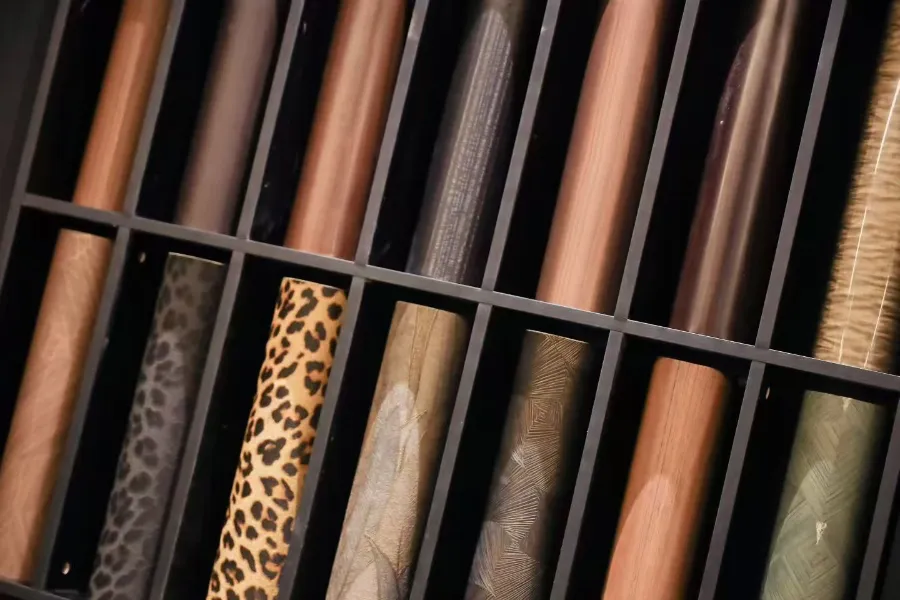
1. Understanding PVC Embossed Film for Lamination and Wrapping
PVC embossed film is a polyvinyl chloride-based decorative film featuring a textured surface created through a specialized embossing process. Unlike smooth PVC film, its surface contains raised or recessed patterns that add visual depth and a distinctive tactile feel.
The material is commonly supplied in rolls and can be manufactured in different colors, thicknesses, widths, and surface designs. Depending on the formulation and intended application, it may also incorporate additives that influence flexibility, weather resistance, processing performance, and surface characteristics.
Two major applications are lamination and wrapping.
PVC Film for Lamination
Lamination involves bonding decorative PVC film to a substrate to create a finished surface. Common substrates include MDF, particleboard, plywood, composite panels, and certain plastic or metal components.
The embossed surface can create wood-grain, leather-like, stone-inspired, geometric, or other decorative effects. In addition to improving appearance, the film can help protect the underlying substrate from everyday surface contamination, minor scratches, and abrasion, depending on the product specification.
PVC Film for Wrapping
Wrapping involves covering a product or component with a flexible film. It is frequently used for furniture profiles, decorative moldings, door frames, cabinet components, and other products with flat, curved, or shaped surfaces.
For wrapping applications, flexibility, elongation, thickness consistency, and adhesion compatibility are particularly important. The film must follow the substrate profile without developing wrinkles, cracks, excessive stretching, or surface defects.
A PVC embossed film designed for flat-panel lamination may not automatically be suitable for complex profile wrapping. Always evaluate the intended processing method and substrate before confirming an order.
2. How the Embossing Process Creates Functional Surfaces
Embossing is a surface-forming technique that creates three-dimensional textures on PVC film. A patterned roller or embossing tool transfers a specific design onto the film under controlled pressure and temperature conditions.
The exact production process varies according to the film structure, formulation, and manufacturing equipment. However, several major stages are commonly involved.
Step 1: PVC Compound Preparation
PVC resin is combined with suitable processing additives, stabilizers, pigments, and other formulation components. The formulation determines important characteristics such as flexibility, color consistency, thermal behavior, and processing performance.
Step 2: Film Formation
The prepared material is processed into a continuous film through an appropriate manufacturing method. Thickness uniformity, surface cleanliness, and dimensional stability are important quality considerations at this stage.
Step 3: Surface Embossing
The film passes through an embossing system that transfers the selected texture. The embossing roller design, pressure, temperature, and production speed all influence the resulting pattern.
Step 4: Cooling and Finishing
After embossing, the film is cooled and stabilized. Depending on the product design, additional finishing treatments or protective coatings may be applied to achieve the required surface characteristics.
Step 5: Inspection and Roll Packaging
The finished film is inspected for thickness variation, color consistency, embossing uniformity, surface defects, and other agreed quality requirements before being wound into rolls.
A well-controlled manufacturing process helps maintain consistent decorative appearance and predictable performance during downstream processing.
3. Key Advantages of PVC Embossed Film
Manufacturers choose embossed PVC film because it combines decorative flexibility with practical processing benefits. The actual performance depends on formulation, product construction, and application conditions.
3.1 Enhanced Visual Appeal
Embossed textures add depth and dimension to otherwise flat surfaces. They can reproduce the appearance of natural materials or create modern decorative finishes that support different product styles.
Common decorative options include:
- Wood-grain patterns for furniture and interior panels.
- Leather-like textures for decorative surfaces.
- Stone-inspired finishes for architectural applications.
- Matte and textured finishes for contemporary designs.
- Geometric and customized patterns for specialized products.
3.2 Customizable Appearance
Color, pattern, gloss level, and embossing design can be selected according to the requirements of different projects. This flexibility allows manufacturers to create coordinated product collections and distinctive surface finishes.
3.3 Surface Protection
Depending on the formulation and any additional surface treatment, PVC embossed film can provide protection against common surface contaminants, handling marks, and minor abrasion.
However, the actual resistance to chemicals, scratches, moisture, and UV exposure should be confirmed through product specifications and relevant testing rather than assumed for all PVC films.
3.4 Flexible Processing Options
PVC film can be developed for different processing requirements, including flat lamination, vacuum forming, and profile wrapping. The appropriate formulation and thickness should be selected according to the equipment and substrate.
3.5 Efficient Decorative Manufacturing
Using decorative film can reduce the need for certain traditional surface-finishing operations. It also makes it possible to achieve repeatable patterns across multiple components when production conditions are properly controlled.
4. Common Industrial Applications of PVC Embossed Film
PVC embossed film is used across several industries where decorative appearance, surface consistency, and practical processing characteristics are important.
4.1 Furniture Manufacturing
Furniture manufacturers use embossed PVC film to finish cabinet doors, wardrobe panels, drawer fronts, shelving components, and decorative furniture parts.
Wood-grain and matte textures are particularly useful for creating different furniture styles without relying exclusively on natural wood veneer.
4.2 Interior Decoration
Decorative wall panels, interior trim, ceiling components, and other architectural products may use embossed PVC film to achieve consistent surface designs.
4.3 Door and Window Components
Profile wrapping applications include decorative finishing for door frames, window components, moldings, and other shaped profiles. Films intended for these applications should demonstrate suitable flexibility and adhesion compatibility.
4.4 Cabinet and Kitchen Components
Cabinet manufacturers often require decorative films that combine attractive textures with easy cleaning and consistent appearance. Film selection should consider the expected exposure to moisture, cleaning products, heat, and daily handling.
4.5 Decorative Panels and Composite Products
PVC embossed film can also be used on selected composite boards and manufactured components where a textured decorative surface is required.
| Application | Common Surface Designs | Important Requirements |
|---|---|---|
| Cabinet doors | Wood grain, matte, textured | Adhesion, cleanability, appearance |
| Furniture panels | Wood grain, geometric | Color consistency, abrasion resistance |
| Door frames | Wood texture, solid colors | Flexibility, profile conformity |
| Decorative moldings | Embossed and custom patterns | Stretching behavior, adhesion |
| Interior panels | Stone, leather, matte textures | Surface durability, visual uniformity |
5. Important Technical Specifications of PVC Embossed Film
Technical specifications directly affect whether a film can meet production requirements. Buyers should request detailed product information instead of relying only on product photographs or general descriptions.
5.1 Film Thickness
Thickness influences flexibility, coverage, handling, forming behavior, and the finished surface appearance. Thicker films may offer different handling and coverage characteristics, while thinner films may be more suitable for specific applications requiring greater flexibility.
The ideal thickness depends on the substrate geometry, lamination equipment, wrapping method, and desired finished appearance.
5.2 Embossing Pattern and Depth
The embossing pattern determines the tactile and visual effect. Pattern depth and consistency should be evaluated across the entire roll to avoid noticeable differences between finished products.
5.3 Color Consistency
Color variation between production batches can create difficulties for manufacturers working on large projects or repeat orders. Buyers should establish color references and sample approval procedures before mass production.
5.4 Flexibility and Elongation
Flexibility is especially important for profile wrapping and products with complex shapes. The film must accommodate the required forming conditions without cracking, whitening, or excessive distortion.
5.5 Surface Performance
Depending on the intended environment, buyers may need to evaluate:
- Scratch and abrasion resistance.
- Stain and chemical resistance.
- Moisture resistance.
- Heat resistance.
- UV and light stability.
- Surface cleanability.
- Embossing retention after processing.
5.6 Adhesion Compatibility
Successful lamination and wrapping require compatibility between the PVC film, adhesive, substrate, and processing conditions. A film with attractive surface characteristics may still produce unsatisfactory results if its bonding requirements are not properly matched.
Ask suppliers for a technical data sheet (TDS), available samples, recommended processing conditions, and applicable test information. Verify all critical specifications before approving bulk production.
6. How to Choose the Right PVC Embossed Film for Your Project
Selecting the correct film requires a clear understanding of the final product and manufacturing process. The following steps can help procurement teams reduce material mismatch, processing defects, and unnecessary costs.
1Define the End Application
Start by identifying whether the film will be used for flat-panel lamination, vacuum lamination, or profile wrapping. These applications may require different flexibility, thickness, and adhesive compatibility.
2Identify the Substrate Material
Confirm the substrate type, surface condition, and geometry. MDF, particleboard, plywood, and plastic profiles may require different bonding approaches and preparation methods.
3Select the Surface Design
Choose an embossing pattern and color that match the finished product. Consider the relationship between texture, lighting, product positioning, and customer expectations.
4Confirm Technical Requirements
Discuss thickness, width, roll length, flexibility, surface treatment, and performance requirements with the supplier.
5Test Samples on Actual Equipment
Sample testing is essential. A film that performs well in a laboratory or on a different production line may behave differently under your actual manufacturing conditions.
Evaluate adhesion, surface appearance, pattern consistency, edge behavior, and the finished product after processing.
6Evaluate Long-Term Supply Consistency
For recurring orders, consider whether the supplier can maintain consistent colors, textures, specifications, and production quality across batches.
| Selection Factor | Questions to Ask | Why It Matters |
|---|---|---|
| Application | Is it for lamination or wrapping? | Determines film performance requirements. |
| Substrate | What material will be covered? | Affects adhesion and compatibility. |
| Thickness | Which thickness suits the process? | Influences flexibility and handling. |
| Embossing | Which texture and depth are required? | Determines the finished appearance. |
| Quality | What tests and tolerances are available? | Reduces batch inconsistency risks. |
| Supply | Can repeat orders match approved samples? | Supports stable long-term production. |
7. Lamination and Wrapping: Processing Considerations
Even high-quality PVC embossed film can produce poor results if the processing conditions are unsuitable. Manufacturers should establish appropriate operating parameters through supplier guidance and production trials.
7.1 Substrate Preparation
The substrate should be clean, dry, and free from dust, oil, loose particles, and other contaminants. Surface unevenness may affect bonding and create visible defects after lamination.
7.2 Adhesive Selection
Adhesive selection depends on the PVC film formulation, substrate material, equipment, and operating environment. Confirm adhesive compatibility and follow the adhesive manufacturer's recommendations for application and curing.
7.3 Temperature and Pressure Control
Temperature and pressure must be suitable for the film, adhesive, and substrate. Excessive heat may cause deformation or dimensional changes, while insufficient process conditions may lead to weak bonding or incomplete surface contact.
7.4 Tension Management
During roll processing, stable film tension helps prevent wrinkles, stretching, and uneven feeding. Excessive tension can distort the film or affect the embossed texture.
7.5 Cooling and Final Inspection
Allow the finished product to stabilize according to the process requirements. Inspect the surface for bubbles, edge lifting, wrinkles, color differences, and pattern distortion before proceeding to packaging.
Do not rely on universal temperature, pressure, or speed settings. Conduct trial runs using the actual film, adhesive, substrate, and equipment combination before starting full-scale production.
8. Common Quality Problems and Their Solutions
Understanding common processing defects helps manufacturers identify the source of problems and improve production efficiency.
Wrinkles During Wrapping
Possible causes: Uneven film tension, incorrect feeding alignment, unsuitable film flexibility, or inconsistent substrate geometry.
Recommended solutions: Check the tension system, adjust feeding alignment, inspect substrate dimensions, and confirm that the film is designed for the required profile.
Poor Adhesion or Edge Lifting
Possible causes: Incompatible adhesive, contaminated substrate, insufficient bonding conditions, or unsuitable surface characteristics.
Recommended solutions: Review substrate preparation, verify adhesive compatibility, and optimize the process based on technical recommendations.
Embossing Pattern Distortion
Possible causes: Excessive stretching, unsuitable temperature, excessive pressure, or inappropriate film specifications.
Recommended solutions: Adjust processing conditions, evaluate the film's forming behavior, and select a product suitable for the required application.
Color Differences Between Batches
Possible causes: Differences in raw materials, production parameters, color formulation, or manufacturing batches.
Recommended solutions: Establish approved color samples, specify color tolerances, and request batch inspection records where available.
Air Bubbles on Laminated Surfaces
Possible causes: Trapped air, uneven adhesive application, substrate contamination, or unsuitable lamination conditions.
Recommended solutions: Improve substrate cleaning, check adhesive distribution, and verify equipment settings.
| Quality Issue | Potential Cause | Corrective Action |
|---|---|---|
| Wrinkles | Unstable tension | Adjust film feeding and tension |
| Edge lifting | Insufficient bonding | Check adhesive compatibility |
| Pattern distortion | Excessive stretching | Review film and forming conditions |
| Color variation | Batch differences | Use approved color references |
| Air bubbles | Trapped air or uneven bonding | Improve surface preparation |
9. PVC Embossed Film vs. Other Decorative Films
Different decorative films offer different combinations of flexibility, surface appearance, processing compatibility, and environmental performance. PVC embossed film is one option among several materials used in furniture and interior finishing.
| Material | Typical Characteristics | Common Considerations |
|---|---|---|
| PVC Embossed Film | Textured appearance, versatile designs, flexible formulations | Requires suitable adhesive and processing compatibility |
| PVC Smooth Film | Flat decorative surface, consistent visual finish | Does not provide the same embossed tactile effect |
| PET Decorative Film | Commonly selected for certain applications requiring specific surface and chemical performance | Processing and bonding requirements vary by construction |
| PP Decorative Film | Polyolefin-based decorative material | Surface treatment and adhesive selection can be important |
| Natural Wood Veneer | Authentic natural wood appearance | Natural variation, material cost, and finishing requirements |
There is no universally superior decorative material. The best choice depends on product design, processing equipment, performance requirements, budget, and the expectations of the end market.
For projects requiring textured decorative finishes, PVC embossed film can be a practical option when its specifications match the intended application.
10. How to Evaluate a Reliable PVC Film Supplier
Choosing a reliable supplier is just as important as choosing the right film. Consistent material quality, technical support, and clear communication can help reduce production interruptions and procurement risks.
Manufacturing Capability
Understand the supplier's production capabilities, available film structures, embossing options, and customization services. Confirm whether the supplier can manufacture the specifications required for your project.
Technical Documentation
A professional supplier should be able to provide relevant technical information, such as product specifications, available thicknesses, width options, and recommended applications.
Sample Availability
Request samples before placing a large order. Evaluate the material using your actual production equipment and compare the results with your quality requirements.
Quality Control
Ask how the supplier controls thickness, color, surface appearance, embossing consistency, and roll quality. For repeat orders, discuss how approved specifications and samples will be maintained.
Customization and Communication
Different projects may require special colors, patterns, dimensions, or performance characteristics. Clear technical communication helps suppliers understand the application and recommend appropriate product configurations.
Future Colors (Shandong) Material Technology Co., Ltd. is a company brand buyers can contact when exploring PVC decorative film solutions. When discussing a project, buyers should provide their application details, desired surface design, and technical requirements to help establish the most suitable product specifications.
Questions to Ask Before Ordering
- What PVC embossed film specifications are currently available?
- Can different colors and embossing patterns be customized?
- Which products are suitable for flat lamination or profile wrapping?
- Can samples be provided for production testing?
- What are the available roll widths and thickness options?
- What quality inspection procedures are used?
- Can repeat orders maintain the approved appearance and specifications?
- What are the minimum order quantity and production lead time?
11. Frequently Asked Questions About PVC Embossed Film
Q1: What is PVC embossed film mainly used for?
PVC embossed film is mainly used for decorative lamination and wrapping applications. Common uses include furniture panels, cabinet doors, decorative profiles, interior components, and composite products requiring textured surfaces.
Q2: Can PVC embossed film be used for both lamination and wrapping?
Yes, but the film must be designed for the intended processing method. Flat lamination and profile wrapping have different requirements for flexibility, elongation, bonding, and dimensional stability.
Q3: Can PVC embossed film be customized?
Many manufacturers offer customization options, including colors, patterns, thicknesses, widths, and surface finishes. Available options depend on the supplier's production capabilities and order requirements.
Q4: How do I choose the correct thickness?
Consider the substrate, product geometry, processing equipment, and required finished appearance. Request samples and technical recommendations instead of selecting thickness based on appearance alone.
Q5: Does embossed PVC film improve scratch resistance?
Embossing itself does not automatically guarantee scratch resistance. Performance depends on the PVC formulation, surface coating, film construction, and testing conditions. Request relevant test data when scratch resistance is a critical requirement.
Q6: Why does PVC embossed film sometimes lose its texture during processing?
Excessive heat, stretching, pressure, or unsuitable processing conditions may affect the embossed pattern. Selecting an appropriate film and controlling production parameters can help maintain the intended surface appearance.
Q7: How should PVC embossed film be stored?
Store film rolls in a clean, dry, and well-ventilated environment. Protect them from direct sunlight, excessive heat, moisture, dust, and physical damage. Follow the supplier's storage and handling recommendations.
Q8: What information should I provide when requesting a quotation?
Provide the intended application, substrate material, desired color and embossing pattern, thickness, roll width, estimated quantity, and any special performance requirements. Reference samples or photographs can also help clarify the specifications.
Q9: Can PVC embossed film be used in high-temperature environments?
Temperature suitability depends on the formulation and product construction. Buyers should confirm the recommended operating temperature and evaluate dimensional stability under the actual service conditions before use.
Q10: How can I ensure consistent quality for repeat orders?
Establish an approved reference sample, document all critical specifications, agree on acceptable tolerances, and confirm the supplier's batch inspection procedures. These steps help reduce differences between production batches.
12. Conclusion: Selecting PVC Embossed Film for Better Finishing Results
PVC embossed film for lamination and wrapping offers manufacturers a flexible way to achieve attractive textured surfaces across furniture, interior decoration, decorative profiles, and other industrial products. Its range of patterns, colors, and processing options makes it suitable for projects with different aesthetic and functional requirements.
However, successful application depends on matching the film to the substrate, equipment, adhesive system, and final operating environment. Buyers should pay close attention to thickness, flexibility, embossing consistency, color stability, surface performance, and bonding compatibility.
Testing samples, reviewing technical documentation, and communicating clear specifications with the supplier are essential steps toward achieving reliable production results.
Looking for PVC Embossed Film for Your Project?
Choosing the right decorative film can make a significant difference in product appearance, processing efficiency, and finished quality.
Future Colors (Shandong) Material Technology Co., Ltd. welcomes inquiries from furniture manufacturers, distributors, converters, and industrial buyers looking for PVC decorative film solutions.
Share your required thickness, color, embossing pattern, roll dimensions, and application details with our team. We can discuss your project requirements and help you explore suitable material options.
Contact us today to discuss your PVC embossed film requirements, request product information, and explore potential cooperation opportunities.
Contact Us