
Which 2000w Mini Garment Steamer Delivers Powerful Steam Performance?
2026-11-06
A 2000w Mini Garment Steamer is designed to make everyday garment care faster and more convenient by combining high heating power with a space-saving structure. However, wattage alone does not determine whether a steamer can deliver consistent wrinkle removal, convenient operation, and reliable long-term performance. Buyers also need to consider steam output, heating time, water tank capacity, soleplate or steam-head construction, safety protection, portability, and maintenance requirements.
This guide explains the important features of a high-power mini garment steamer, how to evaluate its performance, which details matter when purchasing for home or commercial use, and what importers and distributors should confirm before placing bulk orders. It also introduces practical considerations for selecting a dependable garment steamer manufacturing partner.
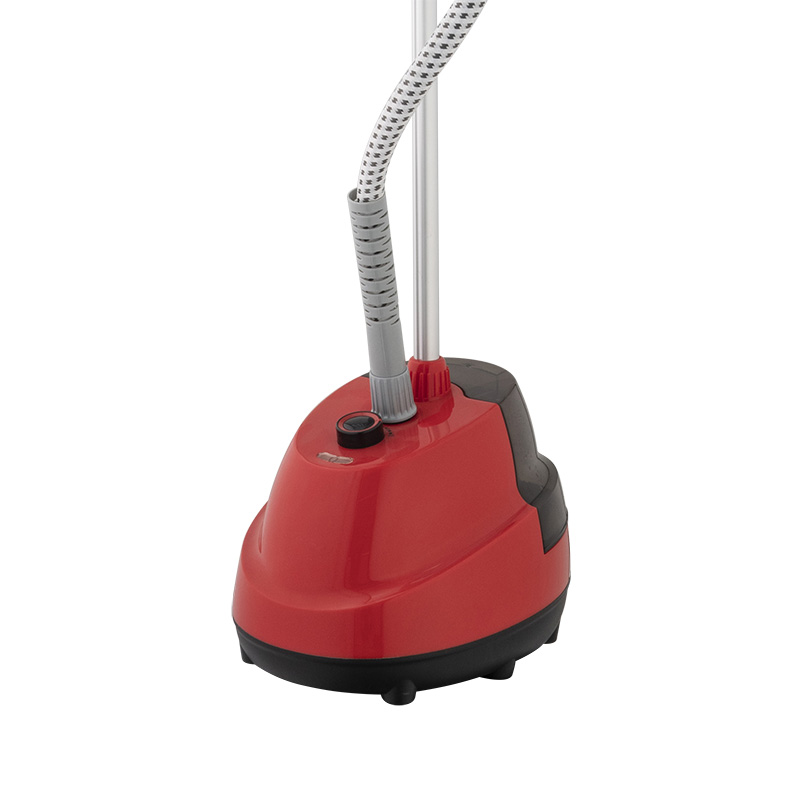
1. What Is a 2000w Mini Garment Steamer?
A 2000w Mini Garment Steamer is a garment-care appliance that uses electrical heating to convert water into steam for relaxing wrinkles in clothing and other suitable fabrics. Its 2000W rated power indicates the electrical power consumed during operation under the specified voltage and operating conditions. The mini format emphasizes a relatively compact structure and convenient storage compared with many traditional full-size ironing systems.
Unlike conventional dry ironing, which generally relies on direct contact between a heated soleplate and fabric, steaming introduces hot vapor to the textile surface. The moisture and heat help relax fabric fibers, making wrinkles easier to smooth with the appropriate steaming technique.
This makes a mini garment steamer useful for people who need convenient garment care without preparing a full ironing board every time. Depending on its actual design, a mini model may be suitable for quick clothing touch-ups, travel-related garment care, small apartments, bedrooms, and other spaces where storage is limited.
Why Are More Buyers Interested in Compact High-Power Steamers?
Modern consumers expect household appliances to save time without taking up unnecessary space. A compact garment steamer with a high-power heating system can address several common problems:
- Limited storage space: A compact structure is easier to store in cabinets, wardrobes, or travel luggage when the product is designed for portable use.
- Time-consuming ironing: Steam can help relax wrinkles without always requiring a conventional ironing board.
- Clothing preparation: Users can refresh suitable garments before work, meetings, business trips, or social occasions.
- Flexible garment care: Steamers can be useful for a variety of clothing styles and suitable textile materials.
- Convenient daily operation: A straightforward control system makes regular garment care easier for different household users.
Nevertheless, the word mini should not be interpreted as a guarantee of a particular weight, tank capacity, or travel-friendly size. Buyers should review the actual dimensions, net weight, water capacity, and product configuration before making a decision.
2. How Does 2000W Power Improve Steaming Performance?
Heating power is one of the first specifications customers notice when comparing garment steamers. A 2000W heating system provides substantial electrical input for heating water and supporting steam generation. For consumers who regularly deal with wrinkled clothing, this can be an important performance consideration.
2.1 Heating Efficiency and Preparation Time
Users generally want an appliance that is ready when they need it. A well-designed heating system can reduce the waiting period between switching on the appliance and beginning garment care.
However, heating time depends on more than wattage. Heating element construction, water volume, thermal design, voltage, initial water temperature, and internal control systems all influence how quickly the appliance reaches its operating condition.
For this reason, buyers should compare the manufacturer's tested heating time instead of assuming that every 2000W steamer heats up at exactly the same speed.
2.2 Steam Output and Wrinkle Removal
Steam output, usually measured in grams per minute (g/min), helps explain how much steam an appliance can deliver during operation. Consistent steam production is important because users need enough vapor to treat fabric effectively without excessive interruptions.
A higher wattage rating does not automatically mean a higher or more stable steam output. The heating chamber, water supply, steam passages, temperature control, and nozzle design also affect the result.
When comparing two 2000W models, examine their measured steam output, heating time, continuous operating duration, and steam consistency together. A balanced system is more meaningful than a power rating considered in isolation.
2.3 Matching Power with Different Garment-Care Needs
Different users have different expectations. A consumer who steams one shirt before leaving home may prioritize quick preparation and easy handling. A clothing retailer may care more about repeated operation, reliable steam delivery, and convenient garment presentation.
For B2B buyers, it is therefore useful to identify the main application before selecting a configuration. The best product is not necessarily the one with the highest specification in every category, but the one that delivers suitable performance for its intended users.
3. Which Features Matter Most in a Mini Garment Steamer?
A high-quality garment steamer should combine heating performance, user-friendly construction, operational safety, and practical maintenance. The following features deserve attention when evaluating a 2000w Mini Garment Steamer.
3.1 Efficient Heating Structure
The heating body plays an important role in converting water into steam. Material selection, internal structure, heat transfer efficiency, and resistance to scale accumulation can all influence long-term performance.
Aluminum heating bodies are used in some garment steamer designs because aluminum offers useful heat-transfer characteristics and relatively low weight. The actual results still depend on the design, manufacturing quality, and maintenance requirements of the complete heating system.
3.2 Stable and Consistent Steam Delivery
Unstable steam can make garment care inconvenient. Users may need to stop repeatedly, wait for steam to recover, or go over the same area several times.
A suitable steam delivery system should be evaluated for:
- Consistent steam production during normal operation.
- Appropriate steam distribution from the outlet or steam head.
- Reliable internal water circulation.
- Suitable temperature regulation.
- Easy access for routine cleaning where applicable.
3.3 Water Tank Capacity
The water tank determines how much water is available for steaming before refilling becomes necessary. A larger tank may support longer operating sessions, while a smaller tank can help reduce the overall size and weight of a compact product.
There is no universally ideal capacity. A travel-oriented model may prioritize compact dimensions, whereas a household or retail-oriented model may benefit from a longer operating period.
Buyers should check whether the tank is removable, easy to refill, securely fitted, and simple to clean. They should also compare the stated working duration under the manufacturer's actual test conditions.
3.4 Ergonomic Handling and Portability
Comfort matters when a product is used frequently. A well-designed handle, balanced weight distribution, convenient water filling, and accessible controls can improve the user experience.
For products marketed as mini steamers, buyers should pay attention to the complete packed dimensions as well as the appliance dimensions. Packaging size directly affects storage, shipping, and retail display.
3.5 Safety Protection
Because garment steamers operate with electricity, hot water, and high-temperature vapor, safety engineering should never be overlooked.
Depending on the model and market requirements, buyers should investigate protection against overheating, appropriate electrical insulation, stable operation, leakage prevention, and automatic shut-off features where provided.
It is also important to check the applicable safety certifications and test reports for the specific model and destination market. Certification claims should be supported by valid documentation rather than assumed from the manufacturer's general product range.
3.6 Durable Housing and Internal Components
The external housing should withstand normal household handling, while internal electrical and heating components must be suitable for the appliance's operating conditions.
Material quality, assembly precision, wiring arrangement, sealing performance, and component consistency all contribute to product reliability. Buyers should request samples and review relevant quality inspection procedures before confirming large orders.
4. Which Fabrics Can a Garment Steamer Handle?
One advantage of steam-based garment care is its flexibility across different clothing materials. However, not every fabric responds to heat and moisture in the same way. The correct method depends on fabric composition, construction, dye stability, decorative details, and manufacturer care instructions.
| Fabric Type | Steaming Considerations | Recommended Approach |
|---|---|---|
| Cotton | Can develop visible wrinkles during washing and storage. | Use an appropriate steam setting and keep the garment properly supported. |
| Linen | Often develops deep and persistent creases. | Apply controlled steam and allow sufficient time for wrinkles to relax. |
| Polyester | May be sensitive to excessive heat depending on its construction. | Follow the care label and test a hidden area first. |
| Silk | Delicate fibers and finishes may be affected by heat or water. | Use extra caution and follow the garment manufacturer's instructions. |
| Wool | May benefit from careful steaming but can lose shape if handled incorrectly. | Maintain a suitable distance and avoid unnecessary pressure. |
| Denim | Heavy fabric may require more time to relax noticeable creases. | Steam gradually and work in manageable sections. |
Important Fabric-Care Precautions
- Always read the clothing care label before steaming.
- Test delicate, dyed, coated, or decorated fabrics in an inconspicuous area.
- Keep the steam outlet at the distance recommended in the appliance instructions.
- Avoid directing hot steam toward skin, people, or pets.
- Do not steam materials that the garment manufacturer identifies as unsuitable for steam treatment.
A garment steamer is a convenient garment-care tool, but it should not be considered a universal replacement for every ironing or professional textile-care method.
5. How Does a Mini Steamer Compare with Other Types?
Different garment-care appliances are designed for different usage scenarios. Understanding these differences helps distributors and consumers select products that match their target market.
| Product Type | Main Advantage | Potential Limitation | Typical Application |
|---|---|---|---|
| 2000W Mini Garment Steamer | Combines high rated power with a compact product concept. | Actual portability and operating time depend on its design. | Convenient household garment care and compact-space use. |
| Traditional Steam Iron | Direct contact and pressure help create defined creases. | Often requires an ironing board and careful handling. | Shirts, trousers, and garments requiring sharp creases. |
| Full-Size Vertical Garment Steamer | May offer a larger water tank and longer continuous operation. | Requires more storage space. | Households, clothing shops, and frequent garment steaming. |
| Low-Power Handheld Steamer | Often prioritizes lightweight construction and simple handling. | May offer different heating and steam performance levels. | Quick touch-ups and occasional garment care. |
Is a Higher-Power Mini Model Always Better?
Not necessarily. A high-power model can be attractive to buyers who want strong heating performance, but the complete product must still meet expectations for handling comfort, water capacity, durability, and safety.
For example, frequent travelers may prefer a smaller appliance with a practical water tank and compatible voltage. Families may prioritize convenient refilling and stable operation. Retail businesses may need a product that is easy to demonstrate and use repeatedly.
The most suitable model is the one that balances performance, design, price positioning, and the expectations of the target customer.
6. What Should Buyers Check Before Purchasing?
For importers, wholesalers, retailers, and private-label brands, choosing a garment steamer involves more than comparing catalog photographs and headline specifications. A structured purchasing process can help reduce product mismatches, unexpected costs, and after-sales problems.
6.1 Confirm the Complete Technical Specification
Ask the manufacturer for a detailed specification sheet covering the following information:
| Specification | Why It Matters |
|---|---|
| Rated Power | Helps determine the appliance's electrical power requirements. |
| Rated Voltage and Frequency | Must match the electrical standards of the destination market. |
| Heating Time | Indicates how long users wait before operation. |
| Steam Output | Helps evaluate the product's steam delivery performance. |
| Water Tank Capacity | Influences refilling frequency and operating duration. |
| Product Dimensions and Weight | Affect portability, storage, freight, and retail positioning. |
| Safety Features | Help assess operational protection and market suitability. |
| Accessories | Determine the complete package and user experience. |
6.2 Check Voltage Compatibility
Electrical requirements vary across international markets. Some markets commonly use 110–120V systems, while others use 220–240V systems. Frequency requirements may also differ.
Buyers should confirm the actual rated voltage and frequency of the exact model before ordering. A product should not be assumed to support multiple voltage standards simply because it has a 2000W rating.
6.3 Evaluate Sample Quality
A product sample provides an opportunity to assess the actual user experience before bulk production. During sample evaluation, buyers should examine:
- External housing finish and component fit.
- Power-on behavior and heating consistency.
- Steam stability under normal operating conditions.
- Water tank installation, removal, and refilling.
- Handle comfort and operating control accessibility.
- Potential leakage, unusual noise, or abnormal odor.
- Instruction manual clarity and packaging protection.
Testing should follow the manufacturer's instructions and appropriate electrical safety procedures. A single successful demonstration is not a substitute for durability and compliance testing.
6.4 Review Packaging and Transportation Requirements
For overseas orders, packaging affects both product protection and total landed cost. Buyers should check carton dimensions, gross weight, packing quantity, protective materials, shipping marks, and packaging customization options.
Garment steamers contain electrical components and may include water tanks or other detachable parts. Packaging should prevent unnecessary movement, impact damage, and pressure on vulnerable components during transportation.
6.5 Clarify Commercial Terms Before Bulk Orders
To avoid misunderstandings, buyers should confirm the following details in writing:
- Minimum order quantity (MOQ).
- Sample cost and sample lead time.
- Mass-production lead time.
- Available customization options.
- Payment terms and delivery terms.
- Warranty coverage and spare-parts arrangements.
- Inspection standards and acceptable quality levels.
- Applicable certifications and destination-market documentation.
7. Where Can a 2000w Mini Garment Steamer Be Used?
A compact garment steamer can serve different users depending on its actual size, operating design, and performance characteristics.
7.1 Household Garment Care
For everyday household use, a mini steamer can help prepare workwear, casual clothing, dresses, and other suitable garments. It can be especially convenient when users need to remove light wrinkles without setting up a traditional ironing station.
7.2 Apartments and Small Living Spaces
People living in apartments or shared accommodation may have limited storage space. A compact garment-care appliance can provide a practical alternative to a larger ironing system, provided its dimensions and storage requirements match the available space.
7.3 Business Trips and Travel
Travelers often unpack clothing that has become wrinkled during transportation. A suitable portable steamer can help refresh compatible garments before meetings and events.
However, buyers should verify the actual product weight, dimensions, voltage compatibility, and transportation requirements. A 2000W appliance should not automatically be described as suitable for every travel destination or hotel electrical system.
7.4 Clothing Stores and Retail Environments
Garment retailers need clothing to look presentable before display, photography, or customer fitting. A suitable steamer can help staff prepare garments and reduce the time spent on routine presentation tasks.
7.5 E-Commerce and Private-Label Product Lines
For online retailers, product differentiation is important. A 2000W mini garment steamer may be positioned around its power rating, compact design, ease of operation, and practical garment-care applications, provided these selling points are supported by the actual product configuration.
8. How Can Users Maintain Steamer Performance?
Even a well-designed garment steamer needs appropriate maintenance. Mineral deposits, residual water, and improper storage can affect performance over time.
8.1 Use Suitable Water
Water quality can influence scale accumulation inside the heating system. Follow the manufacturer's recommendations regarding tap water, filtered water, or distilled water. Some appliances are designed for particular water types, so users should not assume that one recommendation applies to every model.
8.2 Empty Remaining Water When Recommended
After use, allow the appliance to cool and disconnect it from the power supply before performing maintenance. Empty the water tank according to the instruction manual, particularly if the steamer will remain unused for an extended period.
8.3 Clean the Appliance Regularly
Scale removal should follow the manufacturer's specified procedure. If the appliance includes a dedicated drainage outlet or descaling function, users should operate it as instructed.
Avoid using unapproved cleaning chemicals, abrasive tools, or excessive force on internal components.
8.4 Store the Product Properly
Keep the appliance in a dry, ventilated location after it has cooled completely. Store detachable accessories carefully and avoid bending or compressing flexible components beyond their intended range.
Regular maintenance is not only about keeping steam output stable. It also helps users identify water leakage, damaged cables, worn seals, and other issues before continued operation creates additional problems.
9. How Can Buyers Select a Reliable Garment Steamer Manufacturer?
Product performance is only one part of a successful purchasing decision. The manufacturing partner also affects product consistency, communication efficiency, customization possibilities, and long-term supply arrangements.
9.1 Look for Relevant Manufacturing Experience
A manufacturer specializing in garment steamers may have a better understanding of heating systems, steam delivery structures, water management, and common product-quality concerns than a supplier with no focused experience in this category.
Buyers should review the company's product range, manufacturing background, quality management processes, and ability to support the required order volume.
9.2 Examine Product Development and Customization Capabilities
Different markets may require different packaging, plug types, voltage configurations, product colors, accessories, and branding arrangements. Before choosing a supplier, buyers should clarify which options are available for the specific model and whether they involve additional tooling, cost, or lead time.
9.3 Verify Quality and Compliance Documentation
Electrical household appliances must meet the applicable requirements of their destination markets. Depending on the country or region, this may involve electrical safety, electromagnetic compatibility, material restrictions, labeling, and other regulatory obligations.
Ask for documentation that corresponds to the exact model and intended market. Check the certificate holder, model number, validity, test scope, and applicable standards rather than relying only on general company statements.
9.4 Consider Cixi Meiyu Electric Appliance Co., Ltd.
Cixi Meiyu Electric Appliance Co., Ltd. is a manufacturer focused on garment steamers and related ironing appliances. Established in 2009, the company integrates product research and development, design, production, and sales.
Its product range includes mini garment steamers, handy garment steamers, vertical garment steamers, and other garment-care appliances. This product specialization provides buyers with options for evaluating different appliance structures and application requirements.
When assessing a supplier, buyers can discuss their target market, preferred product configuration, electrical requirements, packaging expectations, and order quantity with the manufacturer. These details help establish whether a particular 2000w Mini Garment Steamer is suitable for the intended distribution channel.
9.5 Build a Long-Term Supply Relationship
Reliable sourcing involves more than receiving the first shipment. Buyers should also consider how a manufacturer handles repeat orders, product updates, replacement components, quality feedback, and after-sales communication.
A clear agreement on technical specifications, inspection requirements, production schedules, and warranty responsibilities helps both parties manage expectations and reduce unnecessary disputes.
10. Frequently Asked Questions About 2000w Mini Garment Steamers
Q1. What does 2000W mean on a mini garment steamer?
2000W refers to the appliance's rated electrical power. It indicates the amount of electrical power the product is designed to consume under its specified operating conditions. It does not directly indicate steam output or guarantee a particular heating time.
Q2. Does a 2000W mini garment steamer remove deep wrinkles?
It can help relax many wrinkles, but the results depend on steam output, fabric type, garment construction, and operating technique. Deep creases in heavy fabrics may require more time or a traditional iron with direct pressure.
Q3. Is a mini garment steamer suitable for everyday use?
Yes, if its tank capacity, operating duration, construction, and maintenance requirements match the user's routine. Buyers should check the manufacturer's recommended duty cycle and instructions.
Q4. How long does a 2000W garment steamer take to heat up?
Heating time varies according to the heating structure, water quantity, voltage, and model design. The exact time should be confirmed using the manufacturer's technical specifications and test conditions.
Q5. Can a mini garment steamer be used on silk?
Some silk garments may be steamed carefully, but delicate silk can be sensitive to moisture and heat. Always follow the garment care label, check the appliance instructions, and test an inconspicuous area when appropriate.
Q6. Is a 2000W mini garment steamer suitable for international markets?
It may be suitable, provided the model has the correct rated voltage, frequency, plug configuration, labeling, and regulatory documentation for the destination market. Buyers should confirm these details before ordering.
Q7. How can I reduce limescale buildup inside a garment steamer?
Use the water type recommended by the manufacturer, empty residual water when instructed, and follow the specified descaling procedure. Maintenance frequency depends on water hardness and usage frequency.
Q8. What should importers request from a garment steamer supplier?
Importers should request a detailed specification sheet, product samples, applicable certificates and test reports, packaging information, MOQ, production lead time, warranty terms, and customization details.
Q9. Can manufacturers customize a 2000W mini garment steamer?
Customization possibilities depend on the manufacturer and model. Common topics to discuss include branding, packaging, colors, accessories, plug types, and electrical configurations. Buyers should confirm feasibility, MOQ, and additional costs directly with the supplier.
Q10. How do I choose between a mini garment steamer and a vertical garment steamer?
Choose according to storage space, portability requirements, water capacity, operating duration, and frequency of use. A mini model may suit compact-space applications, while a vertical model may be more appropriate for longer steaming sessions and frequent garment preparation.
Find the Right 2000w Mini Garment Steamer for Your Market
Choosing the right garment steamer means finding the right balance between heating performance, steam consistency, compact design, safety, and long-term product reliability. For importers, wholesalers, distributors, and private-label brands, working with an experienced manufacturer is an important step toward building a competitive garment-care product line.
Cixi Meiyu Electric Appliance Co., Ltd. focuses on garment steamer manufacturing and offers a range of garment-care appliances for different market requirements.
Looking for a dependable garment steamer supplier in China? Have questions about product specifications, samples, bulk purchasing, or customization? Contact us today to discuss your requirements and explore a suitable garment steamer solution for your business.