

What makes a 1200W 3 Tubes Halogen Heater With Handle a practical option for everyday supplemental heating? This guide explains how three heating tubes work, how adjustable power settings can improve comfort, why a carrying handle matters, and which factors buyers should consider before purchasing. Discover its advantages, suitable applications, energy consumption, maintenance requirements, and essential safety practices to make a more informed heating decision.
1. What Is a 1200W 3 Tubes Halogen Heater With Handle?
When cold weather arrives, maintaining a comfortable indoor temperature becomes a priority for households, office workers, and people who spend long periods at a desk. However, central heating is not always available, and heating an entire building may be unnecessary when warmth is only needed in one occupied area. A portable electric heater offers a convenient alternative for these situations.
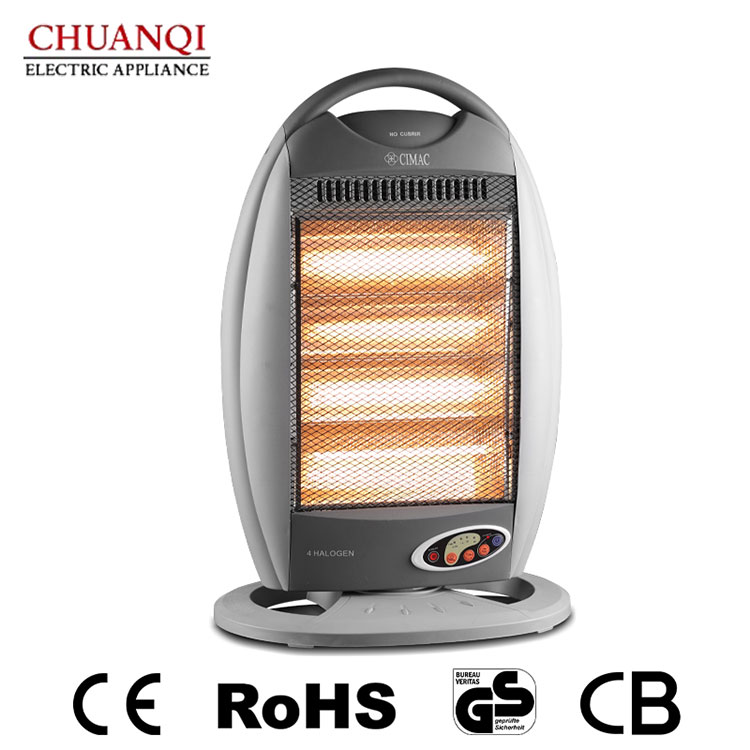
A 1200W 3 Tubes Halogen Heater With Handle is a compact electric heating appliance designed to provide localized warmth through three halogen heating tubes. Its rated power of 1200 watts provides a practical balance between heating output and portability for suitable indoor applications. The integrated handle makes it easier to reposition the appliance when it is switched off, unplugged, and sufficiently cool.
Unlike conventional fan heaters that distribute warm air through forced airflow, halogen heaters primarily deliver radiant heat. This means they can warm people and objects within their direct heating range without first relying on the entire room's air temperature to rise.
For consumers, these features can simplify daily heating. For importers, retailers, and distributors, they also create a straightforward product proposition: adjustable heat, a recognizable design, and convenient portability in one household appliance.
2. How Does a Three-Tube Halogen Heater Work?
A halogen heater converts electrical energy into heat through its heating elements. When electricity passes through the elements, they become hot and emit infrared radiation. This radiation travels outward and warms surfaces, objects, and people that it reaches.
Because radiant heat can be felt directly, users do not necessarily need to wait for the temperature of an entire room to increase before experiencing greater comfort. This characteristic makes radiant heaters useful for short periods of localized heating.
Independent Tube Control for Flexible Heating
One important consideration in a three-tube design is how the heating elements are controlled. Models equipped with independent switches allow users to activate different numbers of tubes according to their immediate needs.
For example, using one tube may provide a lower heating output, while activating all three can deliver the appliance's maximum rated output. The precise wattage of each setting depends on the product's electrical design and should be confirmed in its specifications or instruction manual.
- Lower output: Useful when only a modest amount of supplemental warmth is required.
- Intermediate output: Suitable when additional radiant heat is desirable.
- Maximum output: Uses the full available heating capacity when conditions call for more warmth.
Adjustable operation gives users greater control over comfort and electricity consumption. However, actual heating performance also depends on room size, outdoor temperature, insulation, air movement, and the distance between the heater and the user.
Radiant Heating Versus Fan-Based Heating
Halogen heaters and fan heaters serve related but different purposes. A halogen heater directs radiant energy toward an area, while a fan heater uses a heating element and airflow to distribute warm air. Neither design is universally superior; the better option depends on the heating requirement.
3. Which Features Make This Heater Practical?
1. Three-Tube Heating Configuration
Three heating tubes allow the appliance to provide multiple operating levels when the model is designed with independent controls. This flexibility is useful for buyers who want a simple appliance that can accommodate changing comfort needs without requiring complicated settings.
2. A Maximum Output of 1200 Watts
With a rated maximum output of 1200W, the heater can supply up to 1.2 kilowatts of electrical heating power when operating at full capacity. This makes it appropriate for targeted supplemental heating, although it should not automatically be considered a replacement for a building's primary heating system.
3. A Handle for Easier Transportation
Portability is especially valuable in homes and workplaces where the same appliance may be needed in different rooms. A carrying handle provides a convenient gripping point and reduces the difficulty of moving the heater compared with appliances that lack a dedicated handle.
For safe handling, users should always switch the unit off, disconnect the plug, and allow the heating elements and surrounding components to cool completely before moving it.
4. Straightforward Controls
Simple physical switches are generally easy to understand and operate. Users can select the desired heating level without navigating complex menus. For customers purchasing heaters for family members, rental properties, or shared workplaces, ease of operation can be an important practical consideration.
5. A Compact, Portable Format
A freestanding portable heater can be placed in an appropriate location without permanent installation. This offers flexibility for temporary heating needs, provided that the appliance is positioned on a stable, level surface and used in accordance with the manufacturer's instructions.
Before purchase, buyers should verify the exact dimensions, weight, cord length, available safety protections, and electrical requirements of the specific model. These details can vary between product versions.
4. What Benefits Can Users Expect?
Faster Perceived Warmth
Radiant heating can make a noticeable difference to personal comfort shortly after the appliance is switched on. Instead of relying exclusively on heating all the air in a room, the heater directs energy toward objects and people within its effective range.
This is particularly useful when someone is reading, working at a desk, or relaxing in a consistent seating position. The perceived benefit will vary according to the environment and the heater's distance and direction.
More Control Over Electricity Use
Independent heating controls, where provided, let users select a lower output rather than running the appliance continuously at maximum power. Selecting a suitable setting and switching the unit off when warmth is no longer needed can help avoid unnecessary electricity consumption.
Convenient Movement Between Rooms
The carrying handle supports practical relocation when the heating requirement changes. For example, a user might need supplemental warmth in a home office during the day and in a living area later in the evening. The heater can be moved between these spaces once it is fully cool and disconnected from the power supply.
Simple Everyday Operation
For many buyers, ease of use matters as much as heating output. A straightforward switch arrangement and a portable design can reduce the learning curve associated with operating a household heating appliance.
Nevertheless, convenience should never replace safety. Users should check whether the specific model includes tip-over protection, overheat protection, or other protective devices instead of assuming that every halogen heater has the same features.
5. Where Can This Portable Heater Be Used?
A 1200W three-tube halogen heater is generally intended for suitable indoor environments where localized supplemental warmth is required. Its usefulness depends on the room layout, the surrounding materials, ventilation, and the manufacturer's permitted operating conditions.
Home Offices and Study Areas
People who work or study at a desk may prefer targeted warmth rather than heating every room in the house. A portable heater can provide additional comfort during sedentary activities, as long as it is positioned away from desks, curtains, papers, clothing, and other combustible materials.
Living Rooms and Personal Relaxation Areas
In a suitable seating area, radiant heat can provide supplemental warmth during reading, watching television, or other stationary activities. The heater should be placed where it cannot be knocked over by children, pets, or passing occupants.
Small Offices and Personal Workspaces
Where permitted by workplace policy, a portable heater may help address localized cold spots. Commercial users should also check electrical load limits, fire-safety requirements, and any restrictions imposed by their building management.
Seasonal Supplemental Heating
During transitional weather, users may want additional warmth without immediately activating a larger heating system. A portable radiant heater can be useful for short periods when its output and safety characteristics suit the environment.
6. How Much Electricity Does a 1200W Heater Use?
Electricity consumption is a common concern for people choosing a portable heater. The simplest way to estimate consumption is to multiply the appliance's power rating in kilowatts by its operating time in hours.
Electricity consumption (kWh) = Power (kW) × Operating time (hours)
A heater operating continuously at its full 1200W rating uses approximately 1.2 kWh of electricity per hour. Actual consumption may be lower when users activate fewer heating tubes or switch the appliance off periodically.
| Operating Time | Consumption at 1200W | Estimated Cost at $0.20/kWh |
|---|---|---|
| 1 hour | 1.2 kWh | $0.24 |
| 3 hours | 3.6 kWh | $0.72 |
| 5 hours | 6.0 kWh | $1.20 |
| 8 hours | 9.6 kWh | $1.92 |
These figures are illustrative estimates, not guaranteed operating costs. They assume continuous operation at maximum rated power and an electricity price of $0.20 per kWh. Replace this rate with your local electricity tariff for a more accurate estimate.
Practical Ways to Manage Heating Costs
- Select the lowest heating level that provides sufficient comfort.
- Switch the heater off when leaving the area or when heating is no longer needed.
- Close doors and windows when appropriate to reduce cold drafts.
- Use suitable clothing and other passive comfort measures to reduce reliance on supplemental heating.
- Compare operating costs using your actual electricity tariff rather than the rated wattage alone.
It is important to distinguish between electrical efficiency and total heating cost. A resistive electric heater converts nearly all the electricity it consumes into heat at the point of use, but the cost of maintaining comfort depends on the amount of heat required, operating duration, electricity prices, and the heating technology being compared.
7. What Should Buyers Check Before Purchasing?
Choosing a portable halogen heater involves more than comparing wattage or exterior appearance. Both individual consumers and wholesale buyers should review the appliance's specifications, safety provisions, electrical compatibility, and intended use.
| Evaluation Factor | What to Verify | Why It Matters |
|---|---|---|
| Rated power | Maximum wattage and available settings | Helps determine output and electricity consumption. |
| Heating controls | Independent tube switches or other controls | Supports flexible operation. |
| Portability | Handle design, dimensions, and weight | Affects handling and storage convenience. |
| Safety features | Tip-over protection, overheat protection, and applicable safeguards | Helps assess protection against foreseeable hazards. |
| Electrical compatibility | Voltage, frequency, plug type, and cord specifications | Supports compatibility with the destination market. |
| Compliance documentation | Applicable test reports and certificates for the exact model | Supports market-entry and purchasing assessments. |
| Packaging | Protection, carton dimensions, and shipping configuration | Helps with storage, freight planning, and distribution. |
Consider the Intended Heating Area
A 1200W heater should not be selected solely because its wattage appears suitable. Large rooms, poorly insulated spaces, high ceilings, and very cold conditions may require a different heating solution. Radiant heaters also perform differently from appliances designed to circulate warm air throughout a room.
Buyers should consider whether the priority is personal warmth, temporary supplemental heating, or maintaining a stable temperature across a larger space. This distinction helps prevent unrealistic expectations and unnecessary returns.
Review Product-Specific Safety Information
Before placing an order, confirm the actual protective features of the model under consideration. Do not assume that a particular safety switch, timer, thermostat, remote control, or oscillation function is included simply because another heater in the same product category offers it.
Wholesale and Distribution Considerations
Importers and retailers should also assess carton specifications, minimum order quantities, product labeling, warranty arrangements, spare-part availability, and the documentation required in their destination markets. These factors can influence the overall cost and practicality of distributing a heating appliance.
When working with a manufacturer, request a current specification sheet and confirm that the documents supplied correspond to the exact model and electrical configuration being purchased.
8. How Can Users Operate the Heater Safely?
Portable heaters produce heat at temperatures that can ignite nearby materials or cause burns. Responsible placement and operation are therefore essential, regardless of the heater's size or power rating.
Maintain Adequate Clearance
Keep the appliance well away from curtains, bedding, upholstered furniture, clothing, paper, and other combustible materials. Follow the minimum clearances specified in the product manual, including the required distance in front of the heating elements and above the unit.
Use a Stable, Level Surface
Place the heater on a firm, level surface where it is unlikely to be struck, tipped over, or obstructed. Do not place it on a bed, sofa, or other soft surface that could interfere with stability or ventilation.
Check the Electrical Supply
Confirm that the local supply voltage matches the heater's rating. Inspect the plug, cord, and casing for visible damage before use. Do not operate the appliance with a damaged cord or plug, and avoid extension leads or adapters unless the manufacturer and applicable electrical guidance specifically permit them.
Never Leave an Unsafe Heater Unattended
Switch off and unplug the heater when it is not needed. Do not leave it operating while sleeping or when nobody is present to supervise it. Keep children and pets at a safe distance, and do not allow anyone to touch the heating tubes or hot protective grille.
Do Not Cover or Modify the Appliance
Never cover the heater, block its openings, or use it to dry clothes. Do not remove protective components or attempt unauthorized repairs. If the unit behaves abnormally, produces an unusual smell, or shows signs of electrical damage, disconnect it when safe to do so and arrange an appropriate inspection.
9. How Should a Halogen Heater Be Maintained?
Routine maintenance helps keep a portable heater in good condition and allows users to identify visible damage before it becomes a more serious problem. Always disconnect the appliance from the power supply and allow it to cool completely before cleaning or inspection.
- Clean exterior surfaces: Use a soft, dry cloth to remove dust from accessible exterior surfaces.
- Inspect the power cord: Check for cuts, exposed conductors, discoloration, or other signs of damage.
- Check the base and handle: Ensure that these parts remain secure and free from cracks or looseness.
- Keep the protective grille clear: Remove accessible dust only in accordance with the instruction manual.
- Store the appliance carefully: Keep it in a dry, protected location after it has cooled completely.
- Arrange professional servicing when needed: Do not dismantle electrical components or replace heating elements unless qualified and authorized to do so.
Never immerse the appliance in water or spray cleaning products directly onto it. If a halogen tube breaks, stop using the heater, disconnect it if safe, and follow the manufacturer's instructions for handling and replacement.
For distributors and retailers, providing clear operating and maintenance instructions can help customers understand the product, use it responsibly, and reduce avoidable after-sales problems.
10. Frequently Asked Questions
Q1. What is the maximum power of a 1200W 3 Tubes Halogen Heater With Handle?
The maximum rated power is 1200 watts, equivalent to 1.2 kilowatts. The actual power used depends on which heating elements are activated and the specific configuration of the model.
Q2. Can a three-tube halogen heater heat an entire room?
It can provide supplemental warmth, but its ability to warm an entire room depends on the room's dimensions, insulation, ambient temperature, and layout. Because it primarily provides radiant heat, it is particularly useful for localized heating rather than guaranteeing uniform warmth throughout a large space.
Q3. Does the handle make the heater portable?
Yes. A dedicated handle makes it easier to transport the appliance between suitable locations. For safety, switch off the heater, unplug it, and allow it to cool completely before moving it.
Q4. How much electricity does the heater consume in one hour?
At its maximum rated output of 1200W, the heater consumes approximately 1.2 kWh in one hour of continuous operation. The cost depends on the local electricity tariff and the actual operating setting.
Q5. Is a halogen heater suitable for a bedroom?
It may be used for supplemental heating in a suitable bedroom environment when permitted by the manufacturer and local safety guidance. However, it should be switched off before sleeping and must not be left operating unattended.
Q6. Does every 1200W three-tube halogen heater include a timer or oscillation function?
No. Features vary by model. Buyers should check the product specification sheet to confirm whether a timer, oscillation function, remote control, tip-over switch, or overheat protection is included.
Q7. What should importers verify before ordering halogen heaters?
Importers should verify the rated power, voltage, plug configuration, safety features, product dimensions, packaging, applicable compliance documentation, order quantities, and after-sales arrangements. All specifications and certificates should correspond to the exact model being ordered.
Q8. How can buyers choose a reliable halogen heater manufacturer?
Evaluate the manufacturer's product range, technical documentation, quality-control procedures, production capabilities, export experience, and responsiveness to inquiries. Request samples or product-specific documentation when appropriate, and confirm any customization requirements before placing a bulk order.
Q9. Is a 1200W halogen heater energy-saving?
Its relatively moderate power rating and adjustable heating settings may help users manage electricity consumption. However, actual savings depend on usage time, selected power level, local electricity prices, and the alternative heating system. No specific energy savings should be assumed without a relevant comparison.
Q10. Can the heater be customized for different markets?
Customization possibilities depend on the manufacturer's capabilities and the product model. Buyers should discuss electrical specifications, plug types, labeling, packaging, and other requirements with the manufacturer before confirming an order. Any proposed changes must remain compatible with applicable safety and compliance requirements.
Conclusion: A Practical Approach to Portable Supplemental Heating
A 1200W 3 Tubes Halogen Heater With Handle offers a practical combination of adjustable radiant heating, straightforward controls, and convenient transportation. For users who need additional warmth in a defined area, its three-tube configuration can provide flexibility without requiring a permanent heating installation.
The best purchasing decision depends on more than the headline wattage. Buyers should consider the intended application, room conditions, operating costs, safety features, electrical compatibility, and product-specific documentation. Proper placement, responsible operation, and routine inspection are equally important for maintaining a safe heating environment.
For wholesale buyers, importers, and distributors, working with an experienced manufacturer can also simplify product evaluation and help align specifications with destination-market requirements.
Looking for a Reliable Halogen Heater Supplier?
Cixi Chuanqi Electrical Appliance Factory offers a range of household heating appliances, including halogen heaters designed for different usage requirements. Whether you are a wholesaler, importer, retailer, or distributor, our team can help you explore suitable product options and clarify available specifications.
Contact us to discuss product details, electrical configurations, packaging requirements, and potential cooperation opportunities. Share your target market and purchasing needs so that we can help you identify a suitable heating solution for your business.
Explore our halogen heater range or contact us to learn more about our products and manufacturing capabilities.