

How Does Elevated Comfort with a Curved Backrest Improve Posture During Long Work Sessions
2026-11-18
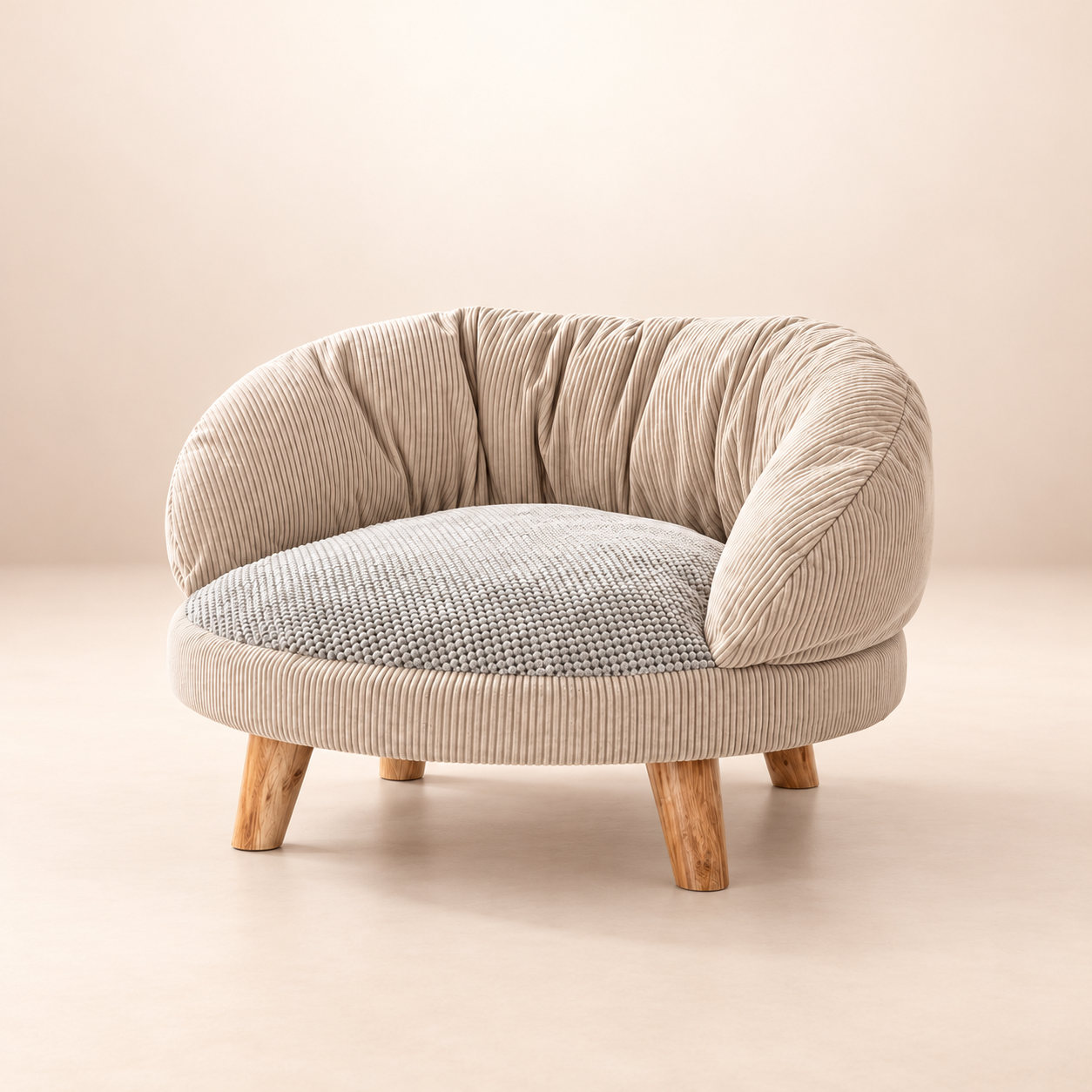
Prolonged sitting is one of the most common triggers of postural decline in modern work environments. Petsbelle has observed that users who switch to seating built around Elevated Comfort with a Curved Backrest consistently report less slouching, reduced lumbar strain, and better spinal alignment across extended workdays. This article explains the biomechanical reasoning behind that improvement, compares seating configurations, and answers the questions users ask most often.
Why Posture Deteriorates During Long Sitting Sessions
Posture is not a static state; it is a continuous neuromuscular negotiation against gravity. After roughly 30 to 45 minutes of unsupported sitting, the deep spinal stabilizers fatigue, the pelvis posteriorly tilts, and the thoracic spine drifts into flexion. The result is the familiar forward-head, rounded-shoulder pattern that compresses lumbar discs and increases load on the cervical spine.
Three mechanical deficits drive this cascade:
-
Absent lumbar contour — a flat or over-soft backrest allows the pelvis to roll backward.
-
Insufficient vertical support height — support that ends below the scapulae leaves the upper back unbraced.
-
Poor load distribution — pressure concentrated at the ischial tuberosities accelerates discomfort and fidgeting.
Elevated Comfort with a Curved Backrest addresses all three by combining a raised support zone with a lumbar contour that follows the natural sagittal curve of the spine.
The Biomechanics of a Curved, Elevated Backrest
A curved backrest works by maintaining the lumbar lordosis — the inward curve of the lower back — without forcing the user into an artificial arch. When the curve is positioned correctly, it acts as a passive guide rather than a rigid brace. The "elevated" component extends support upward to the thoracic region, which is where most slouching begins.
| Design Element | Mechanical Function | Postural Outcome |
|---|---|---|
| Lumbar curvature | Maintains lordosis without compression | Reduced posterior pelvic tilt |
| Elevated support height | Braces the thoracic spine | Less rounded-shoulder drift |
| Contoured lateral edges | Limits lateral sway | More stable trunk alignment |
| Pressure-redistributing surface | Spreads load across the back | Fewer micro-adjustments and less fidgeting |
Petsbelle designs its curved backrest geometry around this principle: support should be continuous from pelvis to mid-back, with no abrupt pressure points that prompt the user to shift away from correct alignment.
How Elevated Comfort with a Curved Backrest Changes Sitting Behavior
Posture improves not only because the body is held differently, but because the user stops needing to correct themselves. When support is present, the postural muscles work less, fatigue accumulates more slowly, and the user is less likely to slide into a slumped position in the second and third hours of work.
Practical effects reported by long-session users include:
-
Delayed onset of slouching — the thoracic brace removes the trigger for forward collapse.
-
Stable pelvic position — the lumbar curve discourages the pelvis from rolling back.
-
Reduced need for repositioning — even pressure distribution lowers discomfort-driven movement.
-
Better head-on-shoulder alignment — a supported trunk reduces compensatory forward head posture.
Comparison: Standard Chairs vs. Elevated Comfort with a Curved Backrest
| Feature | Standard Flat Backrest | Elevated Comfort with a Curved Backrest |
|---|---|---|
| Lumbar support | Minimal or add-on pillow | Integrated contour |
| Thoracic support | Ends mid-back | Extended elevated zone |
| Pelvic stability | Low | High |
| Long-session posture retention | Declines after ~45 minutes | Sustained through multi-hour sessions |
| Adjustment burden | Frequent repositioning | Minimal |
FAQ: Elevated Comfort with a Curved Backrest
Q: How long does it take to adjust to sitting with Elevated Comfort with a Curved Backrest?
A: Most users adapt within three to seven days of regular use; the first sessions may feel different because the lumbar curve is actively maintaining lordosis rather than allowing the usual slump, so short initial sessions of one to two hours are recommended before extending to full workdays.
Q: Is Elevated Comfort with a Curved Backrest suitable for people with existing lower back pain?
A: Yes, provided the curvature matches the user's lumbar profile and the seat height is set correctly; the contour supports rather than forces the spine, which reduces strain, but users with diagnosed spinal conditions should confirm fit with a clinician before adopting any new seating configuration.
Q: Can Elevated Comfort with a Curved Backrest replace ergonomic accessories like lumbar pillows?
A: In most cases it does, because the integrated curve delivers consistent support without the slipping and flattening that affect add-on pillows; accessories may still help in temporary seating, but for sustained daily work the built-in contour of Elevated Comfort with a Curved Backrest provides more reliable alignment.
Q: Does the elevated backrest limit upper-body movement during work?
A: No — the elevated zone is contoured to brace the thoracic spine without locking the shoulders, so reaching, turning, and leaning remain unrestricted while the trunk returns to aligned posture once movement ends.
Conclusion
Posture during long work sessions is shaped less by willpower than by the geometry of the seat beneath the user. Elevated Comfort with a Curved Backrest improves posture by maintaining lumbar lordosis, bracing the thoracic spine, stabilizing the pelvis, and redistributing pressure so that correct alignment becomes the path of least resistance. Petsbelle builds its seating around exactly this principle, helping users hold better posture through the full working day rather than for the first forty minutes of it.
Contact us today to learn how Petsbelle can help you select the Elevated Comfort with a Curved Backrest configuration that best matches your body type and daily work routine.