

How Does a Frequency Conversion Wall Hung Boiler Improve Heating Efficiency?
2026-09-18
As modern buildings place greater emphasis on energy efficiency, stable indoor comfort, and flexible heating solutions, traditional heating equipment is gradually being replaced by more intelligent systems. A Frequency Conversion Wall Hung Boiler is designed to adjust its operating performance according to actual heating demand, helping avoid unnecessary energy consumption caused by constant high-power operation. For residential buildings, hotels, apartments, commercial spaces, and other heating applications, this technology can provide a more responsive and efficient heating experience. Shandong Baedin Electric Appliance Co., Ltd. focuses on developing practical and customizable heating solutions, offering customers equipment options that can be adapted to different installation environments and project requirements.
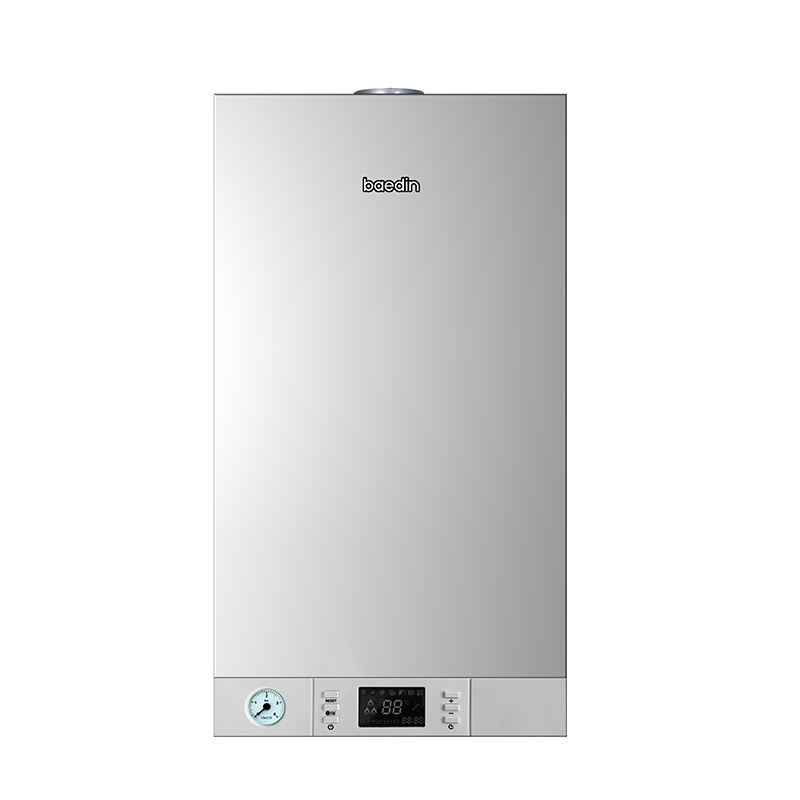
What Makes a Frequency Conversion Wall Hung Boiler Different?
A conventional boiler may operate with relatively fixed operating parameters, while a frequency conversion system can regulate components such as the fan or circulation pump according to changing system requirements. Variable-speed operation can help the heating system respond more precisely to fluctuations in heat demand.
Modern wall-hung boilers commonly combine several technologies, including combustion control, intelligent temperature regulation, efficient heat exchange, and variable-speed components. Commercial products on the market also demonstrate the importance of modulation: some condensing wall-hung boilers can continuously adjust heating output over a broad range, improving comfort while reducing unnecessary cycling.
For a Frequency Conversion Wall Hung Boiler, the basic operating principle can be summarized as:
-
Detect heating demand through temperature and system conditions.
-
Adjust operating frequency according to the required heating output.
-
Regulate heat and water circulation more precisely.
-
Maintain a relatively stable indoor temperature.
-
Reduce unnecessary high-load operation when heating demand is low.
This dynamic response is particularly valuable when outdoor temperatures and indoor heating requirements change throughout the day.
How Does It Improve Heating Performance?
The main advantage of frequency conversion technology is not simply higher power, but more accurate power matching.
When a room requires strong heating, the boiler can increase its operating capacity. When the required temperature has nearly been reached, the system can reduce output rather than continuing to operate at maximum capacity. This principle is similar to high-modulation heating systems, where the heating output can be adjusted according to demand.
The result can include:
-
More stable indoor temperature
-
Reduced unnecessary energy consumption
-
Fewer frequent start-stop cycles
-
Lower mechanical stress on certain components
-
Improved heating comfort
-
More flexible operation under different loads
Research into frequency-conversion heating systems has also found that variable-frequency control can reduce pump electricity consumption under appropriate operating conditions, demonstrating the potential energy-saving value of dynamic control.
Why Is Energy Efficiency Important?
Heating can represent a significant portion of the energy consumption of a building, especially during cold seasons. If a boiler continuously operates at a higher output than necessary, part of the supplied energy may not contribute efficiently to maintaining the desired indoor temperature.
A frequency conversion system addresses this issue by making the heating output more closely correspond to real-time demand.
For example:
| Operating Condition | Conventional Operation | Frequency Conversion Operation |
|---|---|---|
| Cold start | High output | High output when required |
| Temperature approaching target | May continue high output | Automatically reduces output |
| Low heating demand | Frequent on/off operation | Lower operating frequency |
| Temperature fluctuation | Potentially larger | More precise adjustment |
| Energy management | Relatively fixed | Demand-based control |
The actual energy-saving result depends on system design, climate, building insulation, operating settings, and other installation conditions. Therefore, equipment selection should always be based on the complete heating system rather than boiler specifications alone.
What Role Does It Play in Modern Heating Systems?
A Frequency Conversion Wall Hung Boiler can serve as an important heating source for various building types. Its compact wall-mounted structure is particularly suitable where floor space is limited.
Typical applications include:
-
Residential houses and apartments
-
Hotels and guesthouses
-
Villas and high-end residences
-
Small commercial buildings
-
Office spaces
-
Heating renovation projects
-
Customized heating projects
For projects requiring different heating capacities, installation dimensions, control methods, or appearance requirements, customization becomes increasingly important.
How Does Customization Add More Project Value?
Not every building has the same installation environment. A standard boiler may meet general heating requirements, but customized equipment can provide greater flexibility when a project has special space, appearance, connection, or performance requirements.
One notable advantage of Shandong Baedin Electric Appliance Co., Ltd. is its emphasis on customized solutions. In addition to functional customization, the company can support shape customization, including boat-shaped customization for projects where a distinctive equipment form is required.
This capability can be valuable for:
-
Special architectural projects
-
Marine-inspired commercial spaces
-
Customized residential developments
-
Hospitality projects
-
OEM/ODM heating equipment programs
-
Projects requiring non-standard external dimensions
-
Buyers seeking a differentiated product appearance
Shape customization allows the boiler to be developed around the project's requirements rather than forcing every project to use exactly the same standard appearance. For OEM and project-based buyers, this can provide additional flexibility in product positioning and installation planning.
Frequency Conversion vs. Conventional Heating Control
The difference can be understood through the following comparison:
Conventional Control
-
Relatively fixed operating mode
-
Less flexible response to changing demand
-
Greater possibility of repeated start-stop operation
-
Standardized product configuration
Frequency Conversion Control
-
Dynamic operating adjustment
-
Better response to changing heat demand
-
Potentially smoother temperature management
-
More flexible system integration
-
Greater potential for customized applications
Variable-frequency fans and pumps are already used in certain wall-hung boiler designs, demonstrating how frequency regulation can be integrated into compact heating equipment.
Why Choose Shandong Baedin Electric Appliance Co., Ltd.?
For international buyers, choosing a heating equipment supplier is not only about purchasing a boiler. Product adaptability, customization capability, technical communication, and project support can also influence the success of an OEM or customized heating program.
Shandong Baedin Electric Appliance Co., Ltd. aims to provide heating equipment solutions that combine practical performance with flexible customization. Its approach can be particularly suitable for buyers who require more than a standard catalog product.
Key customization directions can include:
-
Heating capacity customization
-
Appearance and shape customization
-
Boat-shaped customization
-
Project-specific configuration
-
OEM/ODM cooperation
-
Application-oriented product development
By combining frequency conversion technology with customized product design, buyers can develop heating equipment that better corresponds to their target market and application environment.
What Should Buyers Consider Before Ordering?
Before selecting a Frequency Conversion Wall Hung Boiler, buyers should evaluate several factors:
-
Heating area – Determine the required heating capacity according to the building size and thermal conditions.
-
Climate – Colder environments may require different output configurations.
-
Installation space – Wall dimensions and connection requirements should be considered in advance.
-
Control requirements – Intelligent temperature regulation and variable-frequency control may improve system adaptability.
-
Energy efficiency – Consider both boiler efficiency and the overall heating system.
-
Customization needs – Check whether the supplier can provide OEM, ODM, appearance, or shape customization.
-
After-sales support – Technical communication and service capability are important for overseas projects.
A Smarter Direction for Customized Heating
The future of heating equipment is moving toward higher efficiency, intelligent control, compact design, and greater customization. A Frequency Conversion Wall Hung Boiler can provide a flexible foundation for this development by adjusting operation according to actual heating demand instead of relying solely on fixed operating conditions.
For buyers looking for a heating solution that combines energy-conscious operation, compact installation, flexible configuration, and distinctive product design, customization can create additional value. Shandong Baedin Electric Appliance Co., Ltd. can support projects requiring standard heating solutions as well as customized designs, including boat-shaped and other special-shape configurations.
If you are sourcing a Frequency Conversion Wall Hung Boiler for residential, commercial, OEM, or customized projects, Shandong Baedin Electric Appliance Co., Ltd. can help you explore a suitable configuration based on your application and market requirements. Contact us to discuss heating capacity, product configuration, OEM/ODM requirements, and shape customization for your next project.