

How Can an Air Purifier Improve Indoor Air Quality and Deliver Customized Solutions?
2026-08-24
Indoor air quality has become an important consideration in homes, offices, hotels, healthcare spaces, and commercial facilities. Dust, pollen, smoke, odors, fine particles, and volatile organic compounds (VOCs) can accumulate indoors from both outdoor sources and everyday activities. The U.S. Environmental Protection Agency (EPA) notes that portable air cleaners can supplement source control and ventilation by reducing indoor airborne pollutants, although no air cleaner can remove every pollutant. For buyers, therefore, choosing the right Air Purifier is not simply about selecting a stylish appliance—it is about matching filtration technology, airflow performance, room size, operating requirements, and customization capabilities to the actual application.
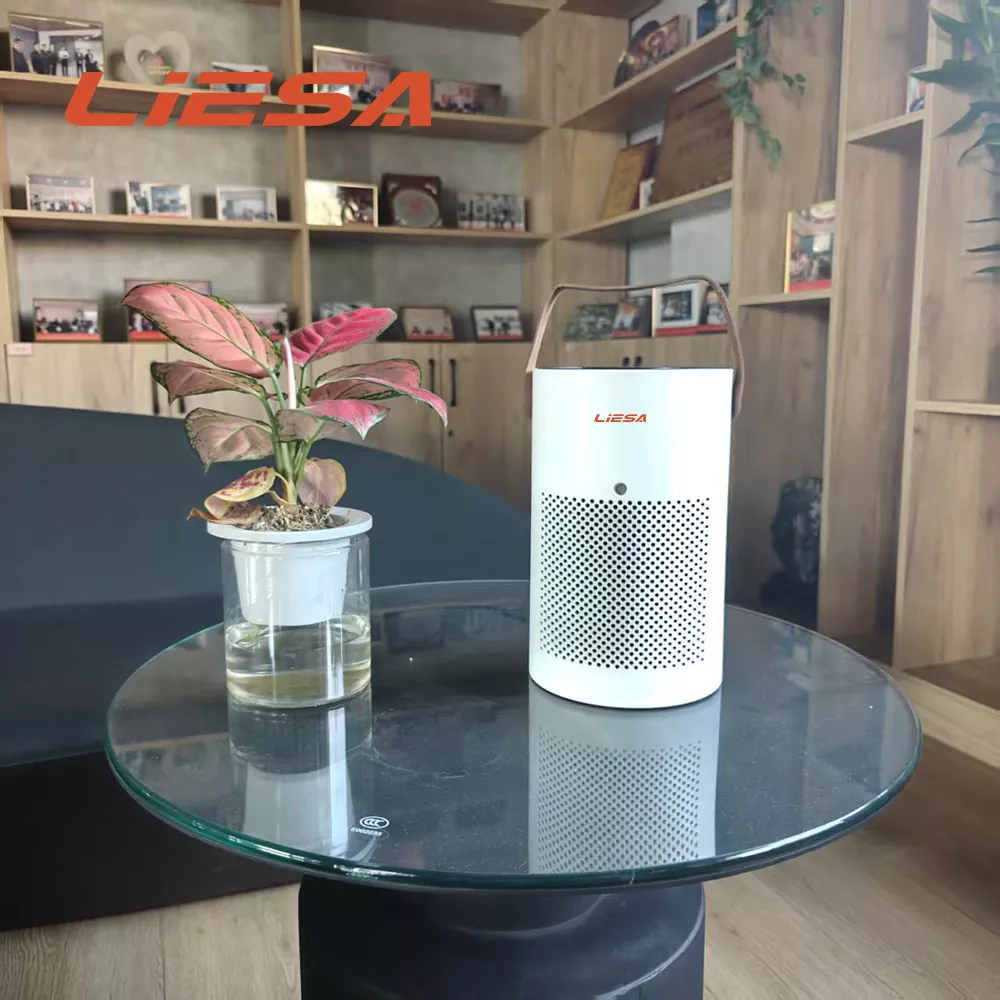
Why Is an Air Purifier Important?
An Air Purifier is designed to circulate indoor air through one or more filtration stages before returning cleaner air to the surrounding environment. Depending on its configuration, an Air Purifier may target airborne particles, odors, smoke, pollen, dust, and certain gaseous pollutants.
Modern indoor environments can contain pollutants generated by cooking, cleaning products, furnishings, building materials, outdoor pollution, and other daily activities. This makes effective air purification particularly valuable in spaces where people spend extended periods of time.
A well-designed Air Purifier can provide several practical benefits:
-
Helps reduce airborne dust and fine particles
-
Helps capture pollen and other particulate contaminants
-
Helps reduce unpleasant odors when activated carbon is included
-
Supports better indoor air quality
-
Provides localized air cleaning for bedrooms, offices, hotels, and other spaces
-
Offers flexible solutions for different room sizes and application requirements
It is important to understand that air purification works best together with proper ventilation and pollution-source control rather than replacing them entirely.
How Does an Air Purifier Work?
Most modern Air Purifier systems combine airflow management with filtration. A fan draws indoor air into the machine, pushes it through filtration media, and releases the treated air back into the room.
A typical multi-stage configuration may include:
| Filtration Stage | Main Function |
|---|---|
| Pre-filter | Captures larger dust, hair, and particles |
| HEPA filter | Targets fine airborne particles |
| Activated carbon | Helps adsorb odors and certain gases |
| Air quality sensor | Monitors selected air-quality conditions |
| Intelligent control | Adjusts operating modes according to settings or sensor feedback |
HEPA is a particularly important technology for particle filtration. According to the EPA, a true HEPA filter is theoretically capable of removing at least 99.97% of particles at 0.3 microns under the defined test condition.
For gaseous pollutants and odors, however, particle filtration alone is not enough. The EPA recommends an activated carbon or other suitable gas-adsorbing filter when gas-phase pollutants are a target.
What Determines Air Purifier Performance?
One of the most important specifications is Clean Air Delivery Rate (CADR). CADR indicates how quickly an air cleaner delivers filtered air, and a higher CADR generally means that the unit can clean a larger area or clean a given space more quickly.
For example, EPA guidance provides estimated minimum CADR values based on room area:
| Room Area | Approx. Minimum CADR |
|---|---|
| 100 sq. ft. | 65 cfm |
| 200 sq. ft. | 130 cfm |
| 300 sq. ft. | 195 cfm |
| 400 sq. ft. | 260 cfm |
| 500 sq. ft. | 325 cfm |
| 600 sq. ft. | 390 cfm |
These figures are estimates based on an 8-foot ceiling, so larger spaces or rooms with higher ceilings may require higher airflow capacity.
In practical applications, customers should consider more than CADR alone. Filter quality, fan performance, noise level, energy consumption, filter life, sensor accuracy, control functions, and overall product construction can all influence the user experience.
Which Air Purifier Solution Is Suitable for Different Applications?
Different environments have different purification requirements. A compact residential Air Purifier may prioritize low noise and attractive design, while a commercial solution may emphasize higher airflow, continuous operation, durability, and maintenance convenience.
| Application | Key Requirements |
|---|---|
| Bedroom | Low noise, compact size, efficient filtration |
| Living Room | Higher CADR, multi-stage filtration |
| Office | Continuous operation, smart control, low maintenance |
| Hotel | Quiet operation, elegant appearance, odor control |
| Healthcare-related spaces | Appropriate high-efficiency filtration and application-specific design |
| Commercial spaces | Higher airflow, durability, serviceability |
| Customized projects | Tailored dimensions, airflow, filtration, controls, and appearance |
This is where working with an experienced manufacturer can create significant value.
How Does Liesa Intelligent Technology (Qingdao) Co., Ltd. Support Customization?
For distributors, importers, project contractors, hospitality companies, and OEM/ODM buyers, a standard Air Purifier may not always meet the exact requirements of a project. Different markets can require different dimensions, filtration configurations, electrical specifications, control interfaces, packaging, branding, and appearance.
Liesa Intelligent Technology (Qingdao) Co., Ltd. focuses on providing flexible Air Purifier solutions and, importantly, supports customized solutions for different applications.
Customization can be especially valuable when buyers need to differentiate their products in a competitive market.
Potential customization areas may include:
-
Product dimensions and housing structure
-
Filtration configuration
-
Airflow and performance requirements
-
Control panel and operating modes
-
Sensor integration
-
Display and indicator design
-
Noise-control requirements
-
Product appearance and color
-
Logo and branding
-
Packaging
-
Electrical specifications for different markets
-
OEM/ODM project requirements
Customized Solutions for Different Air Purifier Projects
A major advantage of customization is that the product can be developed around the application instead of forcing the application to fit a fixed product.
For example, a hotel may require a compact and quiet Air Purifier that blends naturally with interior decoration. An office project may prioritize continuous operation, easy filter replacement, and intelligent control. A distributor may need a private-label product with specific packaging and branding.
Liesa Intelligent Technology (Qingdao) Co., Ltd. can work with customers to evaluate their requirements and develop a solution around the intended market and application.
This approach can help customers achieve better product positioning while reducing the compromises associated with one-size-fits-all equipment.
What Are the Real-World Effects of Using an Air Purifier?
The effectiveness of an Air Purifier depends heavily on correct sizing, airflow, filtration, operating time, and maintenance.
When properly selected and used, an Air Purifier can continuously process indoor air and help reduce concentrations of airborne particles. Higher fan speeds and longer operating times generally increase the amount of air filtered.
Users may experience practical benefits such as:
-
A cleaner-feeling indoor environment
-
Reduced visible dust accumulation
-
Better control of airborne particles
-
Improved odor management when suitable carbon filtration is used
-
Greater comfort in enclosed spaces
-
More targeted air treatment in rooms with specific pollution concerns
However, performance should always be considered realistically. An Air Purifier is not a complete replacement for ventilation, source control, or appropriate HVAC filtration.
How Can Buyers Choose the Right Air Purifier?
Before purchasing or developing an Air Purifier, buyers should evaluate several factors.
1. Determine the Application Area
Measure the room or space that needs treatment. An undersized machine may struggle to provide sufficient airflow, while an unnecessarily oversized unit may increase purchase and operating costs.
2. Check CADR and Airflow
CADR is particularly useful when comparing particle-removal performance. The higher the CADR, the greater the volume of clean air delivered within a given period.
3. Select Appropriate Filtration
If the main concern is fine particles, a high-efficiency mechanical filter such as HEPA may be appropriate. If odors or certain gaseous pollutants are also important, an Air Purifier incorporating sufficient activated carbon may provide a more comprehensive approach.
4. Consider Noise and Energy Efficiency
For bedrooms, hotels, offices, and other occupied spaces, quiet operation can be as important as filtration performance. Energy efficiency also matters when equipment is expected to operate for long periods.
5. Consider Maintenance
Filters eventually become loaded with captured pollutants and need replacement according to the manufacturer's recommendations. A dirty or overloaded filter can reduce performance.
6. Consider Customization
For OEM buyers and project-based customers, customization can make the difference between a generic product and a solution designed specifically for the target market.
Air Purifier vs. Ordinary Ventilation
Air purification and ventilation serve different purposes.
| Air Purifier | Ventilation |
|---|---|
| Filters recirculated indoor air | Brings outdoor air into the space |
| Can target airborne particles | Helps dilute indoor pollutants |
| Useful for localized air cleaning | Useful for broader air exchange |
| Can operate continuously | Depends on the ventilation system |
| Can include particle and gas filtration | Does not necessarily filter all pollutants |
For better indoor air management, these approaches can complement one another rather than being viewed as competitors. EPA guidance similarly emphasizes source control and ventilation while recognizing filtration as a useful supplement.
Why Choose a Customized Air Purifier Manufacturer?
A reliable manufacturing partner can offer more than a finished appliance. For businesses, the real value lies in the ability to transform application requirements into a practical product solution.
A customization-oriented manufacturer can help buyers address:
-
Target market requirements
-
Product differentiation
-
Private-label branding
-
Special installation conditions
-
Customized filtration
-
Different room capacities
-
Control and interface requirements
-
Packaging and distribution needs
For Liesa Intelligent Technology (Qingdao) Co., Ltd., customization is an important advantage for customers seeking flexible Air Purifier solutions rather than standard off-the-shelf products.
FAQ About Air Purifiers
Is an Air Purifier useful for fine particles?
Yes. Air Purifiers equipped with appropriate high-efficiency mechanical filtration can help remove airborne particles. HEPA filters are specifically designed for high-efficiency particle filtration.
Does an Air Purifier remove odors?
It can help reduce odors when it uses an appropriate activated carbon filter. Particle filters alone are not designed primarily for gas-phase pollutants.
Is a higher CADR always better?
Not necessarily. CADR should be matched to the room size and application. An appropriately sized Air Purifier can provide a better balance of performance, energy consumption, noise, and cost.
How often should Air Purifier filters be replaced?
The replacement interval depends on the filter type, operating conditions, pollution level, and manufacturer's specifications. Filters should be inspected and replaced when required because overloaded filters can reduce performance.
Can Air Purifiers be customized?
Yes. OEM/ODM projects can potentially customize dimensions, filtration systems, airflow, controls, appearance, branding, packaging, and other specifications. Liesa Intelligent Technology (Qingdao) Co., Ltd. supports customized Air Purifier solutions for different customer requirements.
Conclusion
Choosing an Air Purifier should be based on more than appearance or a single filtration claim. Room size, CADR, filtration technology, airflow, noise, energy efficiency, maintenance, application, and customization requirements all deserve careful consideration.
For businesses looking for differentiated products, customization can be a major competitive advantage. Instead of accepting a standard configuration, customers can develop an Air Purifier solution around their market, application, brand identity, and technical requirements.
With its focus on flexible solutions and customized product development, Liesa Intelligent Technology (Qingdao) Co., Ltd. can be a practical partner for distributors, project buyers, OEM customers, and businesses seeking professionally designed Air Purifier products.
Contact us today to discuss your required filtration system, airflow, product design, branding, and OEM/ODM specifications. Liesa Intelligent Technology (Qingdao) Co., Ltd. is ready to work with you to develop an Air Purifier solution that fits your application and helps your business stand out.