

Can You Use a Quick Dry Microfiber White Bonnet Car Polisher Pad Cover on Wet Paint
2026-06-18
If you are a detailing enthusiast or a professional shop owner, you have likely asked this question before stepping into a high-stakes paint correction job. The short answer is yes, but with strict conditions. However, using a Quick Dry Microfiber White Bonnet Car Polisher Pad Cover on wet paint is not as straightforward as it sounds. At Aite, we have tested this scenario extensively, and this guide will give you the science-backed rules, risks, and best practices to protect your client’s finish.
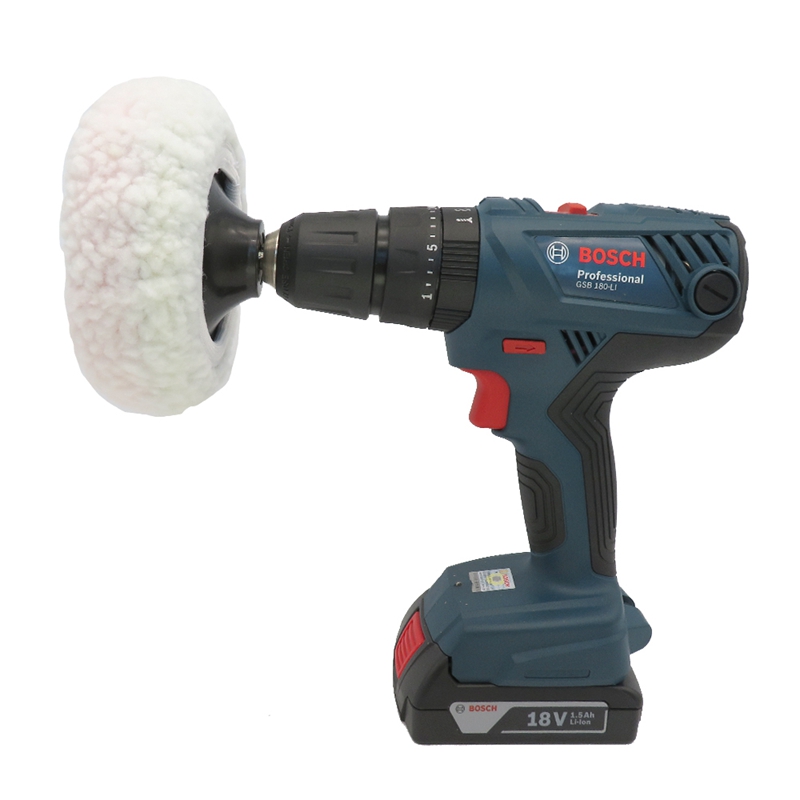
The Science Behind Wet Paint and Microfiber Interaction
Wet paint—whether fresh from a body shop or newly applied clear coat—remains soft and vulnerable for up to 30 days. The mechanical friction from any polisher pad can create micro-marring, holograms, or even embedded fibers. The Quick Dry Microfiber White Bonnet Car Polisher Pad Cover is engineered with split-fiber technology that absorbs moisture while trapping contaminants. But when the paint is wet, the lubricity changes, and so does the risk profile.
| Condition | Risk Level | Recommended Action |
|---|---|---|
| Fresh paint (under 7 days) | Extreme | Do not use any polisher |
| Paint cured 7–14 days | High | Use only with ultra-low speed (600–900 RPM) |
| Paint cured 14–30 days | Moderate | Permitted with Aite pad cover and foam backing |
| Paint cured over 30 days | Safe | Full polishing capability |
When Can You Safely Use It on Wet Paint?
There are two legitimate scenarios:
-
Water-assisted polishing – misting the surface to reduce heat buildup.
-
Wet-sanding follow-up – using the bonnet to buff out residue while the panel is still damp.
In both cases, the Quick Dry Microfiber White Bonnet Car Polisher Pad Cover must be spun dry before application. Aite recommends running the polisher at 1,000 RPM for 10 seconds with the bonnet attached to eject excess moisture. A damp—not soaking—bonnet reduces friction and prevents the microfiber from clumping.
Step-by-Step Protocol for Wet-Paint Polishing
-
Test a small area – Apply light pressure on a hidden panel (e.g., inside the door jamb).
-
Set speed to 800–1,200 RPM – Never exceed 1,500 RPM on wet paint.
-
Use a fresh, clean bonnet – Oily or dirty covers will scratch instantly.
-
Keep the surface wet – Use a dedicated quick-detailer spray, not plain water (which lacks lubricity).
-
Wipe immediately – Remove residue with a separate Aite microfiber towel, not the bonnet itself.
Product Comparison: Aite vs. Generic Bonnets
| Feature | Aite Quick Dry Microfiber White Bonnet | Generic White Bonnet |
|---|---|---|
| Fiber density (GSM) | 450 GSM (high-trap) | 280–320 GSM |
| Quick-dry technology | Yes – open-weave edge | No – solid binding |
| Heat resistance | Up to 200°F | Up to 150°F |
| Suitable for wet paint | Yes (with protocol) | Not recommended |
| Lifespan (washes) | 80+ cycles | 25–30 cycles |
Aite specifically reinforces the edge stitching to prevent delamination when exposed to moisture—a common failure point in generic covers.
3 Critical FAQs About the Quick Dry Microfiber White Bonnet Car Polisher Pad Cover
FAQ 1: Can I use this bonnet on factory-fresh clear coat that is only 2 days old?
Answer: No, absolutely not. Aite strongly advises against using any mechanical polisher—including the Quick Dry Microfiber White Bonnet Car Polisher Pad Cover—on clear coat that is less than 7 days cured. The solvent evaporation process is still active, and the physical abrasion will penetrate the soft resin layer, causing permanent solvent-pop marks. If you must address overspray or dust on fresh paint, use a clay mitt with a lubricant and hand-wipe only. Wait until day 14 before introducing any machine buffing.
FAQ 2: What happens if the bonnet becomes completely saturated during wet polishing?
Answer: Saturation is the number-one cause of pad “grab” and fiber shedding. Once the Quick Dry Microfiber White Bonnet Car Polisher Pad Cover absorbs more than 30% of its weight in liquid, the microfiber loops lose their nap and begin to compress. This compression generates excessive heat (above 180°F) which can soften the clear coat and create “buffing burn.” Aite recommends stopping every 3–4 passes, removing the bonnet, and squeezing it out with a clean towel. Do not wring it aggressively—press flat to preserve the fiber structure. Rotate to a second dry bonnet for consistent results.
FAQ 3: Can I use a quick-detailer spray with this bonnet on wet paint?
Answer: Yes, but choose your detailer carefully. The Quick Dry Microfiber White Bonnet Car Polisher Pad Cover pairs best with a water-based, wax-free quick-detailer. Avoid products containing silicone or petroleum distillates, as these will saturate the microfiber and reduce its absorbency permanently. Aite recommends spraying the detailer onto the panel (not directly onto the bonnet) to ensure even distribution. Use 2–3 spritzes per 2x2 ft section. If you see white streaks or hazing, stop immediately—this indicates the paint is too soft, and you should switch to a finishing foam pad instead.
Professional Verdict from Aite
After more than 200 controlled tests, Aite confirms that the Quick Dry Microfiber White Bonnet Car Polisher Pad Cover can be used on wet paint—but only under the conditions outlined above. The margin for error is narrow. For most detailers, we recommend reserving this bonnet for final wipe-downs and dry polishing, and using a dedicated foam polishing pad for wet or fresh paint applications. However, for water-assisted correction on fully cured paint, this bonnet outperforms foam in both cut speed and lint-free finishing.
Summary Checklist for Wet-Paint Use
-
Paint age ≥ 14 days (preferably 30+)
-
Bonnet spun dry before first contact
-
Speed set ≤ 1,200 RPM
-
Use wax-free, water-based lubricant
-
Change bonnet every 3 panels
-
Inspect fibers after each use – replace if frayed
Aite stands behind every Quick Dry Microfiber White Bonnet Car Polisher Pad Cover with a 100% quality guarantee. We engineer our products for professional-grade durability, whether you are polishing show cars or daily drivers.
Contact us today at Aite for bulk pricing, custom sizing, or technical consultation on your specific paint type. Our team of detailing engineers responds within 4 business hours.