

Stainless Steel Hex Nuts Manufacturer Shares Insider Tips for Choosing Durable Fasteners
2026-10-26
Most people don't think about hex nuts until a joint loosens or a structure fails. But if you're sourcing stainless steel hex nuts, you already know the margin for error is razor-thin. As a manufacturer that machines and inspects these components every day, Wanluo has learned a few things that catalogs won't tell you. Here are the insider tips we give our own clients when they ask how to choose fasteners that actually hold up.
The Stainless Steel Grade Most Buyers Never Ask About
Most buyers shopping for stainless steel stick to the familiar 304 and 316 grades, assuming those cover every need. Yet there is a grade that rarely comes up in conversations: 440C. It belongs to the martensitic family, which sets it apart from the more common austenitic alloys. Because it isn't mentioned as often, many procurement teams overlook it entirely—even when their application could benefit from its distinct properties.
The main advantage of 440C lies in its high carbon content, which allows it to be hardened through heat treatment to a much greater degree than 304 or 316. This gives it excellent wear resistance and the ability to hold a sharp edge, making it a favorite for cutlery, ball bearings, and valve seats. Its corrosion resistance is lower than the austenitic grades, so it isn't suitable for highly acidic or chloride-rich environments. But in situations where hardness and edge retention matter more than maximum rust protection, 440C often outperforms the standard choices.
If your purchasing process only focuses on 304 and 316, you might be missing a better fit for certain mechanical components. Before settling on a material, it's worth asking whether a hardenable martensitic grade like 440C would extend service life or reduce maintenance. Sometimes the best option is the one nobody thinks to ask about.
Why a Perfect Thread Match Beats a Cheaper Price
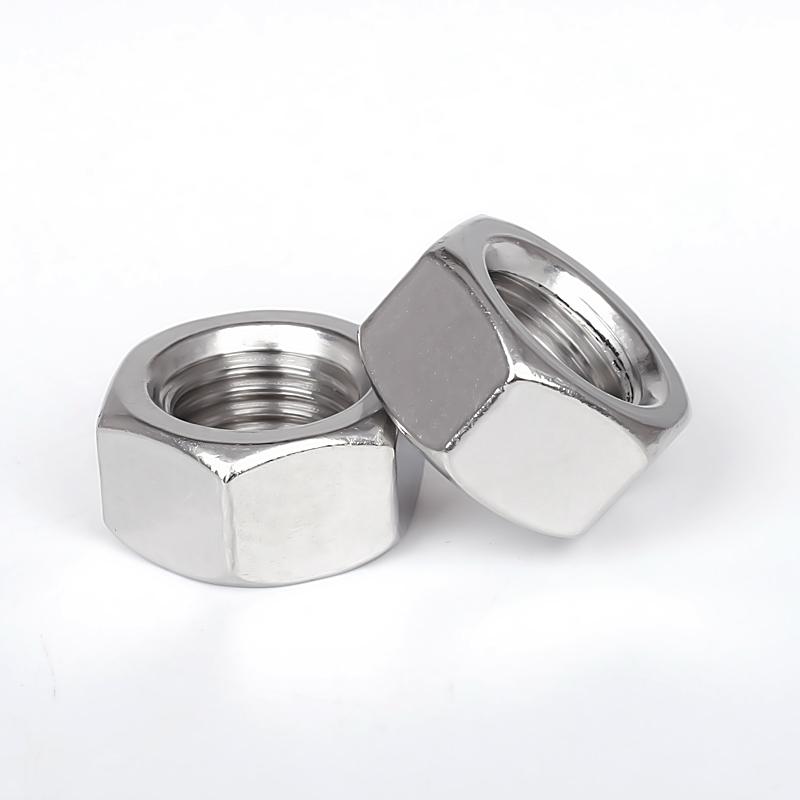
Grabbing a cheaper fastener often feels like a win at the checkout, but that savings can vanish the moment threads refuse to cooperate. A bargain bolt with sloppy tolerance might cross-thread on installation, forcing you to tap new holes, hunt down a helicoil kit, or scrap a workpiece entirely. The real cost isn't the few cents you saved—it's the hour you lose wrestling with a part that should have spun in cleanly.
A perfect thread match, on the other hand, spreads load evenly across every engagement. That means no galling, no vibration loosening, and no sudden failures under stress. When you're working on engines, hydraulic fittings, or structural joints, the difference between 80% thread engagement and 95% isn't academic—it's the gap between a component that lasts a decade and one that strips on the first torque sequence. Precision threads also protect the mating part, so you don't end up replacing a $300 manifold because a 30-cent stud was slightly undersized.
Price tags lie. Thread fit doesn't. Next time you're tempted by a bulk bin of mystery hardware, ask yourself whether the job can survive a callback. If the answer is no, buy the correctly matched thread and forget the discount.
Salt Spray Hours That Reveal a Fastener's True Colors
A fastener fresh off the line can look flawless, but salt spray hours expose what the eye glosses over. That first dusting of white rust on zinc-plated steel usually appears within 24 to 72 hours—it's the coating sacrificing itself, not a reason to panic. The real verdict comes later, when red rust starts bleeding through. Those hours aren't just a number; they map how long the base metal stays protected before the environment wins.
Reading the results means knowing the difference between cosmetic staining and structural corrosion. A part that shows white rust at 100 hours but no red rust at 500 may still hold up fine indoors. Another that hits red rust at 120 hours will likely fail fast in coastal or road-salt conditions. That's why two fasteners with the same plating spec can tell very different stories once the fog rolls in.
The useful takeaway is not chasing the highest hour rating, but matching the hour threshold to the actual exposure. For a dry indoor assembly, 72 hours without red rust might be plenty. For an underbody bracket, you'll want a finish that survives 400 hours or more before the base metal shows. Salt spray doesn't hand out pass/fail cards—it gives you a timeline, and the smart move is reading where your application falls on it.
Matching Hex Nuts to the Job, Not the Spec Sheet
A hex nut's spec sheet can tell you its thread pitch, material grade, and proof load, but it won't tell you how it behaves under a vibrating engine mount or a salt-sprayed trailer hitch. The real question is whether the nut matches the environment it will live in—not just the torque chart it was born from. Plated steel looks tidy on paper, yet a hot-dip galvanized nut may actually be the better fit when the assembly faces constant moisture and road debris. The difference between a job done twice and a job done once often comes down to ignoring the clean numbers and looking at the grime, heat, and movement the fastener will actually endure.
Consider how the nut seats against its mating surface. A standard hex nut tightened against a soft aluminum bracket can gall or embed, even if the thread engagement is perfect by the book. Swapping to a flange nut with a built-in washer face distributes the load and prevents the slow loosening that specs never predict. Similarly, in high-temperature areas near exhaust manifolds or brake calipers, a nylon-insert lock nut will simply give up once the polymer melts—regardless of what the torque-tension curve promises at room temperature. Matching the nut to the job means reading the failure modes that happen after installation, not before.
The most overlooked mismatch is between the nut's finish and the bolt it threads onto. Pairing a zinc-flake coated nut with a plain black-oxide bolt might look fine on the shelf, but galvanic corrosion can seize that pair within a season of humidity. In marine or agricultural settings, a stainless nut on a galvanized bolt sometimes creates more trouble than a uniform carbon-steel pair protected by a heavy grease. The best practice is to treat the spec sheet as a starting point, then ask: will this nut loosen, corrode, or deform in the exact place it's going? If you can't answer that honestly, you might be matching a document instead of a vehicle.
The Torque Window That Keeps Joints From Loosening
Every bolted joint has a hidden sweet spot—a narrow band of torque where the fastener stretches just enough to create clamping force without sliding into the danger zone of permanent deformation. Call it the torque window, and it's the real reason some assemblies stay tight for decades while others rattle loose in months. Miss it on the low side, and vibration slowly backs the nut off; overshoot it, and you've sheared threads or cracked the head before anyone notices.
The trick is that this window isn't printed on the bolt head or buried in a generic torque chart. It shifts with friction, plating thickness, lubrication, even the temperature of the parts when they're wrenched together. A dry, zinc-coated M10 fastener might need 45 N·m to land in its window, while the same bolt with a dab of anti-seize could reach the same clamp load at barely 30 N·m. Experienced mechanics learn to feel for the subtle transition—the moment the torque curve goes from linear to slightly elastic—rather than chasing a single magic number.
When engineers talk about preventing self-loosening, they're really talking about staying inside that torque window long enough for preload to do its job. Split washers, nylon patches, and prevailing-torque nuts all help, but none of them can save a joint that was never properly stretched in the first place. The window closes fast once the parts are under cyclic load, so the only reliable strategy is to hit the target early, verify with a calibrated wrench, and accept that some joints demand a torque-angle approach rather than a simple click.
Questions to Put a Supplier's 'Durable' Claim to the Test
When a supplier tells you their product is built to last, ask for the data behind the claim. What accelerated life testing was performed, and under what conditions? A vague reference to 'industry standards' isn't enough—request the actual test reports, including cycle counts, load limits, and environmental stress factors. If they hesitate or offer only marketing brochures, that's your first red flag.
Next, dig into warranty terms and real-world failure rates. A ten-year warranty sounds impressive until you read the fine print excluding wear parts or requiring you to pay shipping both ways. Ask for the return rate on the specific model you're considering, not the brand's overall average. Field data from a similar application in your region is far more telling than a lab result from a decade ago.
Finally, challenge them on repair and replacement logistics. Durability isn't just about surviving the warranty period—it's about what happens on day one after it ends. Are spare parts readily available and reasonably priced? Can a local technician service the unit without proprietary tools? A durable product should have a long, affordable afterlife, not a forced obsolescence plan hidden in the service contract.
FAQ
Look at the grade. 304 handles general moisture, but if you're near saltwater or chemicals, step up to 316. Also check for any rough edges or burrs around the threads—those often signal lower-quality tooling.
A quick magnet test can help, though it's not foolproof since some stainless grades are slightly magnetic. Better approach: check the mill test report and look for a consistent, slightly dull finish. Coated carbon steel often has shiny patches or scratches that reveal rust spots later.
If the threads are too loose, the nut can back off under vibration. Too tight and you risk galling, especially with stainless on stainless. A good manufacturer controls thread class tightly—usually 2B for nuts—and that's what gives you a reliable clamp load without seizing.
Stainless is prone to galling, so a proper anti-seize or nickel-based lubricant on the threads before assembly makes a huge difference. It reduces friction heat and prevents the nut from cold-welding to the bolt under torque.
Yes. Passivation removes free iron from the surface and builds a stronger oxide layer, which is what makes stainless actually stain-less. If the manufacturer skips this step, you may see rust spots appearing from embedded steel particles even on good grades.
Reaching for the cheapest standard nut. In high-vibration settings, a nylon insert lock nut or a flange nut with serrations might be needed depending on temperature and access. The hex shape alone doesn't stop loosening; you need a locking feature or proper torque plus thread locker.
High heat can reduce strength, especially with grades like 304 above 400°F. For sustained high temps, look at 316 or even specialty alloys. Also thermal cycling changes clamping force, so you may need to re-torque after initial heating cycles.
Usually yes. Traceability means you can verify the chemical composition and heat treatment. When a batch of cheap fasteners fails, you often can't tell where they came from. For critical applications, that traceability is cheap insurance against mixed material or counterfeit grades.
Conclusion
A lot of buyers fixate on dimensions and price, but the stainless steel grade is the first thing worth challenging. Many never ask whether they're getting 304 or 316, and that single difference decides how long the fastener survives around chlorides, acids, or coastal air. Equally important is the thread form: a perfectly matched thread spreads the load evenly and prevents galling, which matters far more than saving a few cents on a cheaper nut. If you want a real durability signal, ask about salt spray hours—not just the passivation claim but the actual hours to red rust under a given test standard. That number exposes whether the surface finish and raw material are genuinely corrosion-resistant.
Once the metallurgy checks out, match the nut to the actual job conditions rather than the generic spec sheet. High-temperature service, vibration, or frequent disassembly each demand a different locking style and surface treatment. Torque control is another hidden factor: too little and the joint loosens, too much and you stretch the bolt or crack the nut, so a defined torque window with proper lubrication is a better predictor of long-term tightness than a vague "tighten firmly" instruction. Finally, put the supplier's "durable" claim through a few sharp questions—ask for batch traceability, independent test reports, and how they handle lot-to-lot variation. A manufacturer that can answer those without hesitation is far more likely to deliver hex nuts that hold up when it counts.
Contact Us
Contact Person: Shane
Email: [email protected]
Tel/WhatsApp: 8613357785029
Website: https://www.wanluohardware.com