

Spiral Freezer Factory Guide: Choosing the Right Partner for High-Capacity Freezing
2026-10-31
Choosing a spiral freezer supplier isn't just about horsepower or price—it's about whether your partner can handle the thermal load, the footprint, and the throughput targets you've already promised to your own customers. In this guide, we break down what separates a genuine high-capacity freezing partner from a vendor that just assembles parts. Worldbase has spent years refining spiral freezer systems for exactly these demands, and the lessons below draw from that factory-floor experience.
Why Floor Space and Airflow Often Matter More Than Rated Capacity
Rated capacity tells you how much a system can handle on paper, but it rarely reflects the constraints of a real installation. A unit that claims a high output but demands more surrounding clearance than the room allows becomes a liability before it even starts working. In tight mechanical rooms or retrofit projects, the physical footprint often dictates whether a piece of equipment can be serviced, replaced, or simply fit through the door. Ignoring floor space for the sake of a larger nominal rating is a classic route to expensive demolition or awkward, long-term operational compromises.
Airflow is the silent mediator between a machine's nameplate and its actual performance. Even the most capable unit will throttle itself if it cannot pull in enough cool air or exhaust heat effectively. Recirculation, insufficient duct clearances, or competing equipment in the same zone can easily rob 20-30% of expected capacity. Many field failures blamed on undersized equipment are really airflow problems, where hot discharge air gets pulled straight back into the intake. That loop creates a thermal runaway that no amount of rated capacity can overcome.
Experienced designers look at the space first and the spec sheet second. They ask how air will move through the room, where the heat will go, and whether a person can actually reach the filter or drain pan without a ladder and a mirror. A modestly rated unit placed with generous clearance and a clear airflow path will often outperform a higher-rated alternative squeezed into a corner. In the end, rated capacity is a promise; floor space and airflow are the conditions that decide whether that promise is ever kept.
Sanitary Welds, Drain Slopes, and the Details That Prevent Recalls
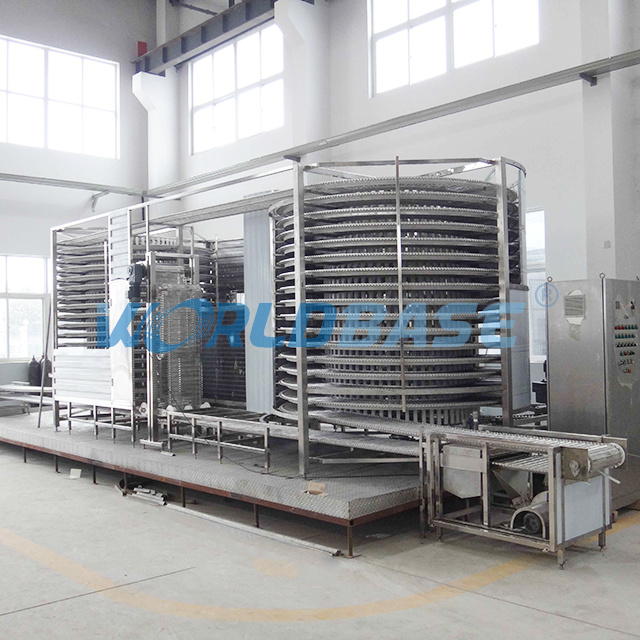
Sanitary welds often get overlooked until a crack or pit shows up in a routine swab. The difference between a weld that holds for years and one that fails in months comes down to purge gas coverage, filler selection, and post-weld finishing. Any oxide layer left inside a product contact surface gives bacteria a place to hide, and that is exactly how a recall starts.
Drain slopes matter more than most engineers admit. A line that looks sloped on paper can sag after installation, leaving standing water where biofilm forms overnight. Even a quarter-inch drop over ten feet can be enough if the supports are rigid and the slope is checked with a laser, not a bubble level. Recalls tied to drainage usually trace back to low points nobody measured after welding.
The details that prevent recalls are not glamorous: passivation after fabrication, orbitally welded joints on small-bore tubing, and documented weld maps that match the actual installation. When these are skipped, the first sign is often a failed environmental swab or a customer complaint. Teams that treat every weld and every slope as a food contact surface tend to stay ahead of the regulators.
The Ownership Cost No One Puts on a Quote Sheet
The figure on a quote sheet is almost never the number you should be comparing. Once a piece of equipment or a software platform lands in your building, a second price tag starts accruing in ways the seller never mentions. It's the hour your best technician spends re-torquing bolts between shifts, the extra set of filters you order every six weeks because the environment is dustier than the datasheet assumed, and the software license that quietly balloons when you add three more users who only need read-only access.
Look at a seemingly simple purchase like a commercial oven or a hydraulic press. The negotiated purchase price might make procurement happy, but the ongoing drain shows up in the power bill, in the cost of keeping a critical spare on hand, and in the half-day of production you lose every time a vendor tech has to clear a fault code that your team could fix with the right training. These line items don't make it onto the spreadsheet because they live in maintenance logs, overtime reports, and utility invoices—not in the sales proposal.
The same logic applies to software and services. The sticker price for a subscription is trivial next to the hours spent rebuilding integrations after an update, the duplicated work that happens while two departments argue about who owns the data, or the slow creep of add-on fees for storage and API calls. If you really want to understand what something will cost to own, ignore the quote sheet and ask one question instead: what would we still be paying for—and what would we still be fixing—three years after the signature? That number is the ownership cost that never gets quoted.
Custom Engineering: When Off-the-Shelf Freezing Falls Short
Standard blast freezers and walk-in units assume a fairly predictable product size, moisture content, and production rhythm. Once a facility starts handling irregular cuts, unusually thick packaging, or batch sizes that swing from a few dozen kilos to several tonnes overnight, the factory setting stops being a minor inconvenience. Doors ice over because the defrost schedule was never meant for that duty cycle. Airflow dead zones leave core temperatures drifting above safe thresholds while surface ice masks the problem. These are not failures of the equipment so much as signs that the original design brief never included your actual load profile.
Custom engineering addresses the mismatch directly. Coil placement, fan speed, rack dimensions, and refrigerant distribution get recalculated around the product you actually freeze, not the product the manufacturer imagined. For a seafood processor dealing with high-moisture fillets in deep trays, that might mean reversing airflow direction mid-cycle and adding adjustable louvers so the bottom layer freezes as fast as the top. For a bakery freezing par-baked loaves on rolling racks, it can mean a narrower cabinet with higher static pressure to push cold air through dense shelf spacing. The result is less rework, fewer rejected pallets, and a freezing curve that fits the production schedule instead of fighting it.
What a Factory’s Test Bay Reveals Before Your First Production Run
A test bay isn’t a showroom. Run a few cycles under load and you’ll see the vibration patterns that don’t appear on a CAD drawing—whether the fixture actually holds tolerance after twenty repetitions, or if the conveyor drifts a few millimeters once the bearings warm up. Those small shifts are the ones that turn into rejected lots later.
Material quirks surface here too. Two pallets of the same spec resin can fill a mold differently when ambient humidity shifts by ten percent. The test bay lets you push a limited batch through at production speed, catching the subtle viscosity changes before they lock into your process parameters. That early adjustment costs hours, not weeks of scrap.
Watch the operators during the trial. You’ll notice which stations force an awkward reach, which safety interlocks slow the takt time, and where the line stops waiting for a manual check. Those observations are what let you rebalance workstations before the first real shift—not after productivity has already flatlined.
Runtime Data, Not Reference Lists: Checking a Partner’s Real Track Record
Reference lists are easy to manufacture. Anyone can hand over three happy clients who will say nice things on a call. What they cannot fake as easily is the steady, unglamorous stream of runtime data: uptime percentages pulled from actual monitoring tools, median response times under real traffic, error budgets that were blown or held, and deployment frequency logged in version control. When a partner opens their dashboards instead of their rolodex, you start seeing how they behave when no one is watching.
Ask to look at the operational telemetry, not a slide deck. Have them walk you through a recent incident timeline, show the postmortem, and explain what changed afterward. Check whether their mean time to recovery lines up with the promises in their sales collateral. A team that quietly ships every day with a low change failure rate is telling you something far more useful than a reference call ever could. The patterns in that data reveal discipline, honesty about tradeoffs, and whether they actually own their mistakes.
One caution: raw numbers still need context. A 99.9% uptime figure means little if it excludes planned maintenance or masks a six-hour outage that fell outside the measurement window. Dig into how the metrics are defined, what is excluded, and how long they have been collected. A genuine track record lives in the boring archives of logs and runbooks, not in a curated list of people who have already agreed to praise the partnership.
FAQ
Focus on their track record with similar capacity ranges, whether they handle thermal calculations in-house, and how they manage airflow uniformity across wide belts. Visit the factory if possible to see welding quality and assembly practices.
Ask for reference installations with similar products and throughput. Check the drive system design, belt tensioning, and evaporator coil configuration, these often reveal whether a factory understands high loads or just scales up a smaller design.
Inquire about fully welded interiors, sloped floors, CIP compatibility, and how easily the drum and belt can be reached. A good factory will show you detailed cleaning procedures, not just talk about hygienic design.
Yes, standard models rarely fit heavy production lines. Ask how they adjust belt width, tier spacing, airflow direction, and infeed/outfeed height. A capable factory will modify without treating every change as a special project.
It has a direct effect on operating cost. Look at coil defrost strategy, fan motor efficiency, and whether they use variable frequency drives. A factory that mentions specific energy metrics is usually more credible than one that only says low consumption.
Expect commissioning support, spare parts availability, remote diagnostics, and training for your maintenance team. Ask for typical response times and whether they have local service partners for your region.
Yes, experienced factories use heat transfer models and may run pilot tests. Request a time-temperature profile before finalizing the freezer length, especially for high-capacity lines where under-freezing is expensive.
Ask each one to explain how their design maintains core product temperature at your peak load. Compare their belt options, air velocity, and defrost intervals in plain terms, then check references rather than brochures.
Conclusion
Choosing a spiral freezer partner for high-capacity operations goes far beyond the headline number on a spec sheet. Floor space and airflow dynamics often dictate real throughput more than rated capacity, because a poorly designed air path can create uneven freezing and bottleneck your line even if the compressor looks powerful on paper. Equally critical are the sanitary details that rarely make the sales pitch: smooth, crevice-free welds and correct drain slopes prevent bacterial harborage and costly recalls. These are not optional extras—they are the difference between a line that runs clean for years and one that gets shut down by a single audit failure. And while the purchase price is easy to compare, the true ownership cost hides in energy consumption, defrost cycles, belt wear, and maintenance downtime that no quote sheet will volunteer. A factory that ignores these factors is selling you a machine, not a solution.
When standard designs fall short, custom engineering becomes essential—whether you need a tighter footprint, a specific belt width, or integration with unusual upstream equipment. A serious partner will have a test bay where you can run your actual product before committing, because real-world freezing curves, sticking, and airflow patterns often contradict theoretical models. Finally, do not be swayed by polished reference lists. Ask for runtime data: uptime percentages, average freeze time deviation, sanitation cycle durations, and actual energy draw under your product load. That data reveals whether a factory truly understands high-capacity freezing or just knows how to close a sale.
Contact Us
Contact Person: Mr Yang
Email: [email protected]
Tel/WhatsApp: +8613809083091
Website: https://en.worldbase.cn