

Inside China's INNOMOTICS Motors Factory: Advanced Electric Motor Production and Innovation
2026-11-01
Step inside the INNOMOTICS Motors factory in China, where the hum of precision machinery isn't just background noise—it's the sound of electric motor production being rewritten. From rotor lamination to final testing, every station reveals a layer of innovation that most industry tours never show. What makes this plant stand out isn't just its scale, but the way it quietly pushes past the usual limits of efficiency and smart manufacturing. And behind some of those breakthroughs lies a less familiar name: Chuangjuman, whose components and process expertise are woven into the production line. Why should you care? Because the next generation of electric motors—for everything from industrial drives to EVs—might already be rolling off these floors, and the story of how they're built is more surprising than you'd expect.
Stepping Into the Heart of Motor Manufacturing
Walk past the loading docks and the hum of machinery shifts from background noise to a full-body pulse. This is where raw copper wire, steel laminations, and rare-earth magnets stop being inventory and start becoming something that spins. The air carries a faint metallic tang, mixed with the warmth of varnish curing in nearby ovens. Nobody here uses the word “factory” without a slight smile — it’s more like watching a thousand precise arguments between torque, heat, and tolerance settle into a single rotating assembly.
The winding stations demand a different kind of attention. Operators guide enameled wire through narrow slots with the ease of someone who has repeated the motion for decades, yet every stator still gets a resistance check that would embarrass a laboratory. Down the line, balancing machines spin rotors at speeds that blur their edges, adding or shaving weight until vibration drops below what your fingertips can detect. It’s not about making parts faster; it’s about making them forget they were ever separate pieces.
At the end of the line, a finished motor sits on a test stand, running through load cycles while a screen traces its current draw. No confetti, no applause — just a nod from the engineer watching the curve flatten. That’s the signal. The motor gets a tag, a crate, and a destination. You leave with a new respect for the fact that every electric vehicle, every industrial pump, every fan in a data center owes its heartbeat to hands and machines that argue quietly until the numbers agree.
When Robotics Meets Copper Windings
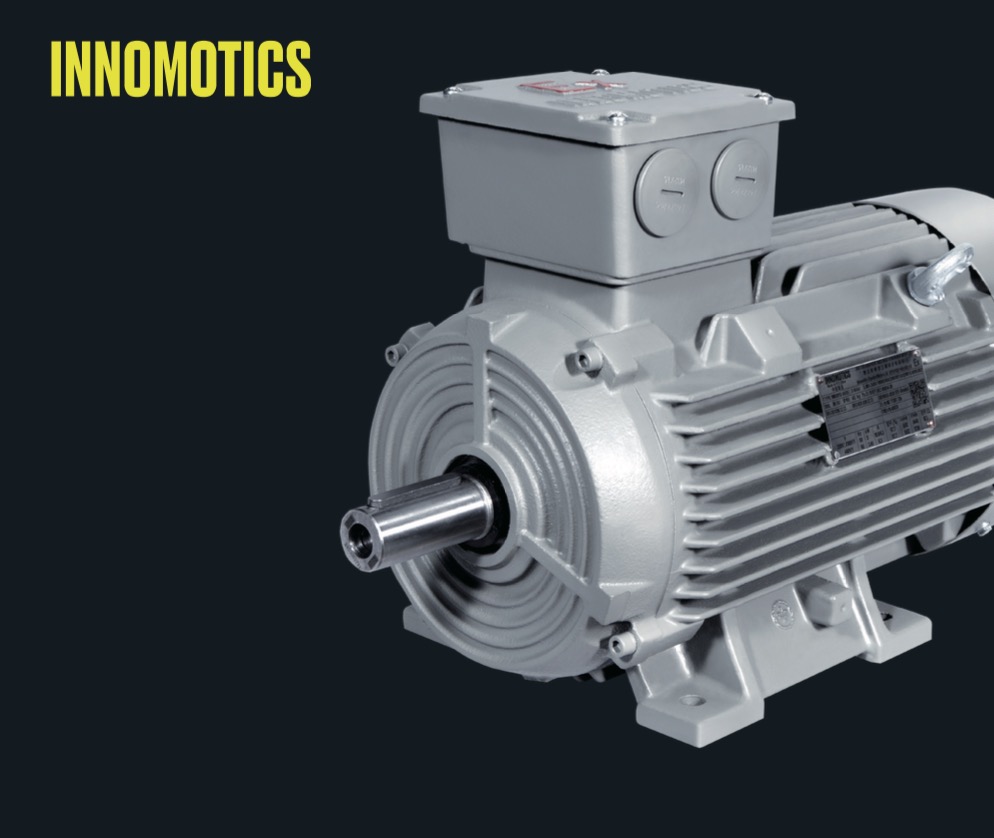
The moment a robotic arm begins laying copper wire into a stator slot, the old manual craft of coil winding changes character. Tension control, turn placement, and layer insulation stop being a technician's feel and become a stream of sensor data. The robot can hold a consistent pull on the copper within a fraction of a newton, adjusting in real time as the wire bends around tight radii. That consistency matters because every slight variation in winding density shows up later as heat, vibration, or loss in the finished motor.
Copper windings are not a one-size-fits-all problem. Hairpin stators, distributed windings, and concentrated coils each demand a different sequence of grips, twists, and insertions. Robotic systems that switch tools mid-cycle can move from forming rectangular copper bars to inserting them into slots without letting the material relax. Some cells now combine machine vision with force feedback: a camera checks the slot position while the arm feels for the slight click of a properly seated conductor. This closes a loop that human hands once managed by experience alone.
The real shift, though, is in what can be built. With robotics handling copper that is thinner, harder, or shaped for tighter slot fills, motor designers can push designs that manual winding simply could not repeat at scale. Production lines become easier to reconfigure for different stack lengths or pole counts, and defects drop because each winding step leaves a digital trace. For electric motors, that translates into higher torque density and quieter operation. Copper stays the same; the hands around it have changed.
The Delicate Art of Balancing Rotors
A rotor that looks perfectly symmetric on a blueprint can still shake itself apart at speed. The real challenge isn't just removing mass from the heavy side; it's knowing where that heavy side truly is once thermal growth, bearing stiffness, and residual stresses enter the picture. Balancing becomes a conversation between measurement and intuition, where the machine tells you one thing while your hands suspect another.
Shop balancing gets you close, but field balancing is where the subtle work happens. A rotor bolted into its actual casing responds differently than it did on the balancing stand. Foundation flexibility, coupling alignment, and even the oil film inside the bearings shift the critical speeds and mode shapes. Sometimes the correction weight you add at one plane creates a new vibration two planes away, so you learn to anticipate cross-effects instead of chasing a single vector.
Modern analyzers and laser alignment tools have removed much of the guesswork, yet the final trim still relies on a feel for the machine's history. An experienced hand can hear a slight beat frequency change, see a phase angle drift, and know whether to add five grams or reshape a blade tip. That blend of data and craft is what keeps the art alive, long after the calculations are done.
Testing Every Motor to Its Limits
On the dyno floor, each motor gets pushed well past its advertised redline while thermocouples buried in the cylinder head watch for hot spots that don't show up on any spec sheet. The goal isn't just survival — it's mapping the exact point where oil pressure wavers or exhaust gas temperatures spike, then tuning around that cliff instead of pretending it doesn't exist.
Cold-soak starts at minus thirty, wide-open throttle runs in hundred-degree heat, and back-to-back hill climbs with a loaded trailer all happen before a single engine ships. Bearings get inspected under a microscope once the abuse is over, and if the wear pattern looks even slightly uneven, the whole calibration goes back to the bench. That kind of back-and-forth rarely makes a highlight reel, but it's what separates an engine that can take a beating from one that just looks tough on paper.
The R&D Lab That Never Sleeps
At 3 a.m., the third-floor lab still hums with the kind of quiet intensity most people associate with daylight. A prototype chassis sits under a cone of light while two engineers argue over thermal paste application—not because they're behind schedule, but because the night shift tends to attract the ones who can't let a problem go.
This is not a place that runs on overtime mandates or heroic all-nighters for show. The lab operates in rolling waves, with morning, evening, and deep-night crews passing projects back and forth through detailed handoff notes and shared caffeine stashes. What keeps it alive isn't a deadline—it's the constant churn of small experiments that fail fast and teach faster.
Walk through at any hour and you'll find whiteboards covered in half-erased equations, a 3D printer laying down a lattice that won't be needed until next quarter, and someone in the corner testing a new sensor array against the hum of the building's own vibration. The output isn't just products; it's a kind of institutional insomnia that turns idle curiosity into usable edge.
A Production Powerhouse with Global Reach
Spread across three continents, our manufacturing network pairs high-volume efficiency with localized flexibility. Every facility runs on synchronized quality protocols, yet adapts to regional material availability and workforce expertise. This balance lets us ship consistently from multiple origins without sacrificing the character of a single, tightly managed operation.
From initial prototyping to final packaging, the entire production chain remains under our direct control. Engineers, sourcing teams, and line supervisors share real-time data, so a shift in demand or a supply hiccup in one region triggers immediate adjustments elsewhere. The result is a supply network that feels less like separate factories and more like one organism breathing across borders.
Our logistics partnerships extend that reach further, turning production capacity into dependable delivery timelines. Whether a client needs containers bound for Rotterdam or air freight to Singapore, the same planning discipline applies. It's this blend of scale and precision that has made us a quiet backbone for brands operating in over forty countries.
FAQ
It blends high automation with human expertise—robotic arms handle winding and assembly, while technicians focus on precision testing. The factory also uses digital twins to simulate production runs before physical builds, cutting waste dramatically.
Every motor goes through a laser-based dimensional check and a 24-hour endurance test under varied loads. Data from these tests feeds back into the production line to fine-tune parameters automatically.
The focus is on low-voltage and high-voltage industrial motors, especially those for pumps, fans, compressors, and conveyor systems. Some lines are dedicated to custom-built motors for harsh environments.
Roughly 70% of the assembly steps are fully automated, including stator winding, rotor balancing, and final packaging. Automated guided vehicles move components between stations without human intervention.
One notable innovation is a modular motor platform that lets customers swap out bearings, cooling systems, and terminal boxes without replacing the whole unit. The R&D team also works on integrating IoT sensors for predictive maintenance.
It uses a closed-loop cooling water system and recovers heat from motor test benches to warm the facility in winter. Scrap copper and steel are sorted and sent back to suppliers for recycling.
Skilled workers handle final tuning, vibration analysis, and custom modifications that robots can't manage. They also lead continuous improvement teams, often suggesting changes that boost line efficiency by 10% or more.
Conclusion
Walking into INNOMOTICS' Chinese plant, you pass rows of stator winding stations where robotic arms thread copper into slots with a rhythm that's almost hypnotic. It isn't a lights-out operation, though. Operators stand at the line's edge, checking wire tension and bend radii by feel. Rotor balancing sits in a separate, quieter bay. Each rotor is mounted on a dynamic balancer, spun to 3,000 rpm, and then manually fitted with tiny counterweights—a process repeated until the vibration signature flatlines. That mix of automated precision and old-school patience runs through the entire factory floor.
Every finished motor gets tortured before it earns a serial number: locked-rotor tests, extended thermal cycling, and full-voltage insulation checks. Meanwhile, the R&D wing never really shuts down. Engineers dismantle prototype motors after a few hundred hours, examining bearing wear and winding hotspots under magnification, then feed those findings back to the production line within days. The result is a factory that doesn't just assemble electric motors—it iterates on them continuously. Units ship to automotive and industrial clients across three continents, but the real export is the engineering culture that treats every rotor, stator, and test report as a chance to improve.
Contact Us
Contact Person: Jony
Email: [email protected]
Tel/WhatsApp: 086-0571-86161808
Website: https://en.hzcjm.com/