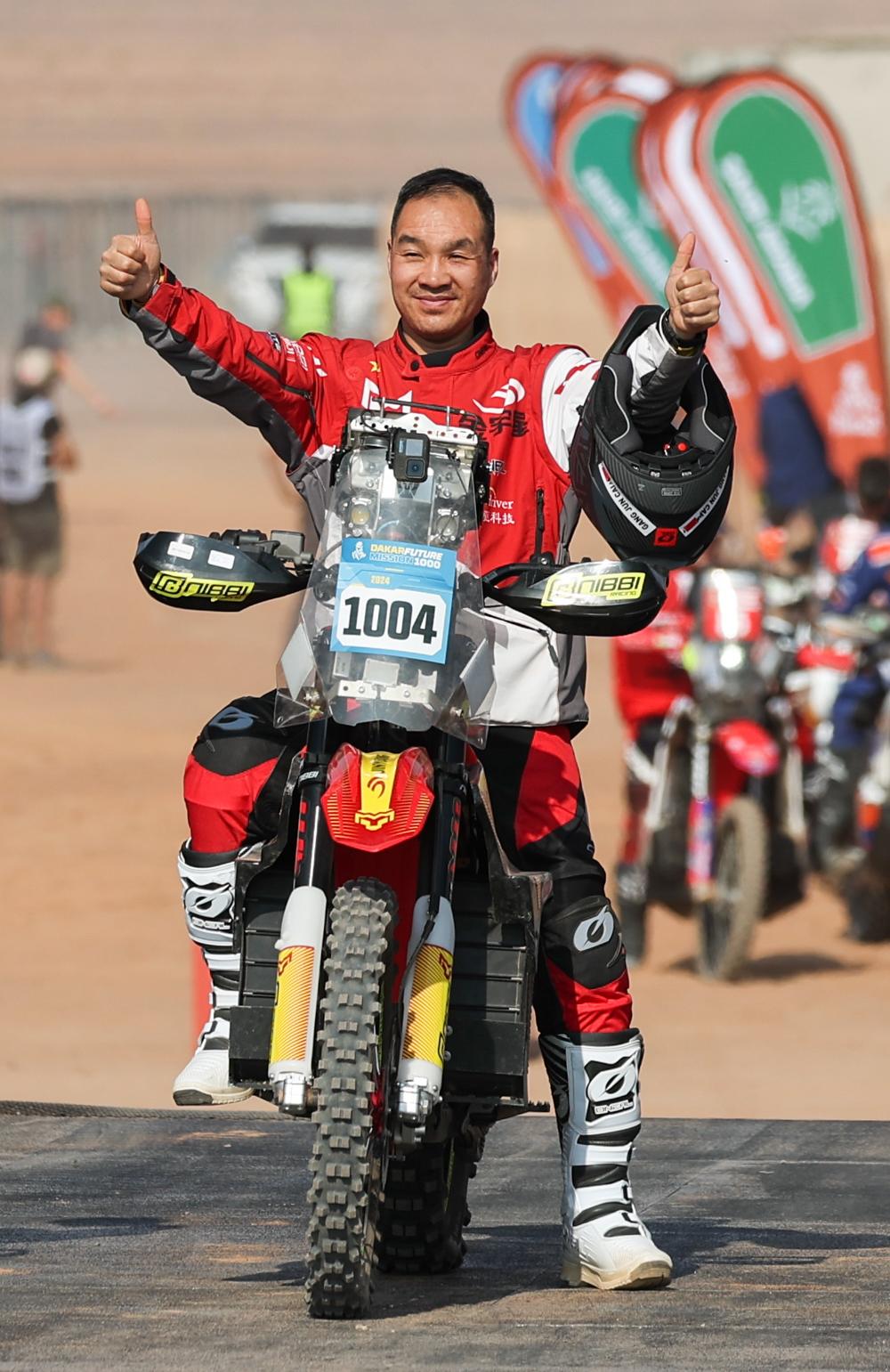

E·XE 880 Enduro Electric Dirt Bike Factory Leads Off-Road Innovation with Advanced Manufacturing
2026-10-16
Most electric dirt bike launches start with horsepower figures. The E·XE 880 Enduro from Arctic Leopard starts somewhere else: on the factory floor. Advanced manufacturing isn't a buzzword here—it's the reason this enduro machine handles rough terrain differently. Here's what happens when off-road innovation gets built from the inside out.
The Quiet Assembly Revolution Behind the E·XE 880
Most people see the E·XE 880 as a finished product—sleek, precise, ready to perform. But the real story unfolds hours before final inspection, in a corner of the factory where robots and humans move in a choreography that never makes the brochure. The assembly line doesn't shout; it whispers. Each component is seated not by brute force, but by a calibrated pressure that would snap a pencil lead. It's the kind of quiet expertise that comes from building the same thing thousands of times, yet treating every unit like it's the first.
What sets this process apart isn't a single breakthrough machine or a patented fastening technique. It's the accumulated weight of small, almost invisible adjustments—a torque setting changed by half a percent, a jig realigned by a technician who noticed a microscopic burr on a Monday morning, a conveyor speed slowed just enough to let an adhesive cure without bubbles. These decisions rarely make it into spec sheets. They live in the muscle memory of the line workers and the logs of the engineers who stay late to watch a batch settle into tolerance.
The result is a device that feels less like it was assembled and more like it grew into its shape. You won't find a badge that says "hand-built" or "artisan crafted," because that would miss the point. The quiet assembly revolution behind the E·XE 880 is not about romance or prestige. It's about a relentless, unglamorous consistency that turns a thousand moving parts into a single, confident motion. And when you press the power button, that's the only thing you hear.
Torque Delivery That Hooks Up on Loose Climbs
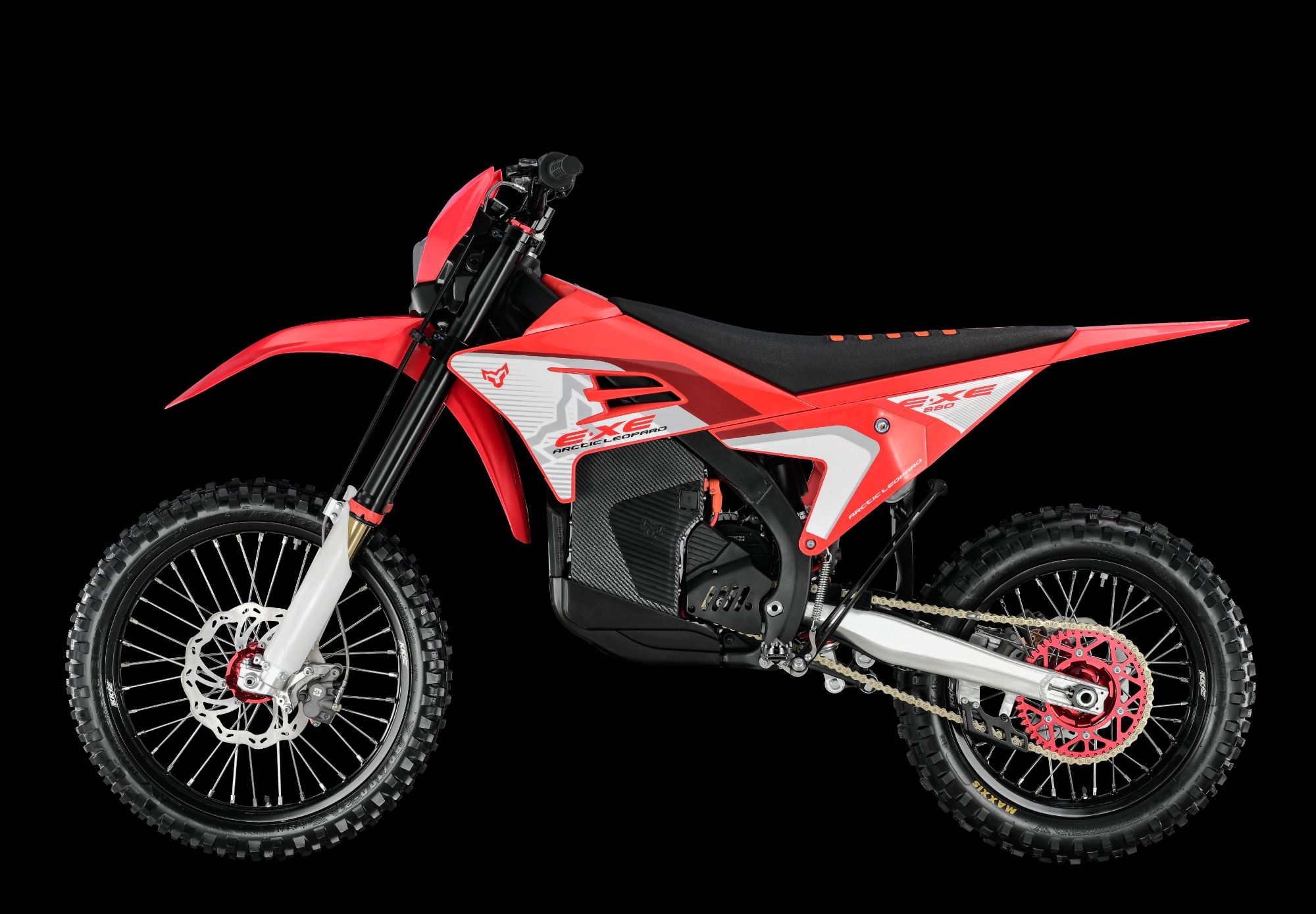
The first thing you notice on a loose, rocky climb is that the power doesn't hit all at once. It builds from nearly nothing, letting the rear tire settle into the surface before the real shove arrives. That brief delay is deliberate—it gives the knobs a chance to grab instead of spinning out the moment you twist the throttle or push on the pedals.
Once the torque ramps up, it holds a flat, almost elastic feel through the mid-range. You can feather the input and the bike responds without a sudden surge that would break traction. On gravel-over-hardpack or dry pine needles, this means you can keep a steady line and let the suspension work, rather than wrestling with constant wheelspin. It feels less like a burst of power and more like a long, firm push that stays just under the edge of grip.
That kind of delivery pays off most when the climb tightens and the surface gets steeper. The rear wheel stays planted, the front stays light, and you can pick a path through loose rocks without having to back off and lose momentum.
Battery Cooling Designed for Slow, Technical Sections
When the trail tightens into a series of rock gardens and off-camber ledges, airflow over the battery drops to nearly nothing. That’s when most e-bike batteries start to sweat. But the cooling strategy here isn’t built for wide-open fire roads or sustained climbs. It’s tuned for the stop-and-go rhythm of technical singletrack, where heat builds in short, intense bursts. Internal channels guide fluid through the cell array with a focus on low-speed circulation, pulling warmth away even when you’re barely moving. The goal isn’t just to hit a number on a spec sheet—it’s to keep cell temperature stable while you’re picking a line through a boulder field.
Most riders don’t notice thermal throttling until the bike feels softer on a punchy climb. In slow sections, the motor is often working harder than the speed suggests, and heat has nowhere to go. That’s why the cooling layout uses a combination of phase-change material and strategically placed vents that work without relying on forward motion. The result is a system that behaves less like a fan and more like a heat sink wrapped around the cells themselves. It’s quiet, passive, and doesn’t care if your average speed is four miles per hour or fourteen.
On long descents followed by immediate tech climbs, the battery doesn’t get a chance to recover. The cooling design accounts for this by preloading the thermal mass during the descent, so when you grab a handful of brake and start ratcheting over roots, the pack is already in a comfortable range. Riders who spend their weekends in places with names like “The Slot” or “Crawlspace” will feel the difference—not as a burst of power, but as a consistent, predictable response from the first pedal stroke to the last dab.
Why the E·XE 880's Chassis Starts With a TIG Weld
TIG welding isn't the fastest way to join aluminum or chromoly, but for the E·XE 880's chassis it's the only way that makes sense. The process lets the welder feed filler rod independently from the arc, so heat stays localized and the surrounding metal doesn't warp or lose its temper. That matters when the chassis jig holds tolerances under a millimeter.
Starting with a TIG weld also means the first structural joint is free of spatter and porosity. There's no grinding or rework needed before the next tube goes in place. On a chassis where every bracket and mount references back to the initial welds, that cleanliness cascades through the whole assembly. You can see it in the uniform bead profile and the lack of heat-affected zone discoloration.
The real reason might be simpler: TIG welding is a slower, more deliberate act. It forces the builder to read the puddle, adjust amperage by foot pedal, and stay with the metal. That level of attention at the very beginning sets a standard for every subsequent step on the E·XE 880. A chassis that starts with haste rarely ends with precision.
Suspension Valving Matched to Instant Electric Thrust
Instant electric thrust changes how a chassis loads its suspension. There is no torque curve building gradually from idle; the moment the accelerator pedal moves, the motor's full twist hits the half-shafts. That immediacy produces a distinct pitch motion — the nose lifts harder on acceleration and dives deeper under regenerative braking. Valving tuned for a combustion car often misses this because it was designed around softer initial throttle response and a different weight transfer rhythm.
The fix is not simply cranking up compression damping. Instead, the low-speed bleed and shim stack need to be rebalanced so the body moves in one controlled, predictable arc rather than hesitating or bouncing back. On the rear axle, extra high-speed rebound control keeps the tire loaded when the motor shoves torque through a corner exit. On the front, slightly more low-speed compression prevents excessive dive during hard regen. The goal is a suspension that responds as quickly as the motor does, without sacrificing compliance over broken pavement.
The result is a car that feels planted without being harsh. You notice it most when leaving a stoplight or punching out of a slow corner — the chassis settles immediately, the tires stay connected, and the weight transfer feels linear rather than abrupt. That is the real difference: valving matched to the electric thrust, not borrowed from a gasoline-era setup.
From Factory Floor to Forest Floor: Testing Without Shortcuts
The first prototype didn't fail in the lab. It failed three miles into a wet Appalachian ridgeline, when a buckle snapped at the exact moment a tester needed both hands to cross a downed spruce. That moment, not the CAD model, changed the design. There is a difference between meeting a spec sheet and surviving the places people actually go, and the only way to find that line is to walk it.
Factory floors are good at consistency. They're less honest about the variables that come with mud, salt, UV exposure, and the odd angle of a loaded pack on a steep descent. So we moved the testing outdoors. Not as a photo op, but as a requirement: prototypes get scuffed, soaked, frozen, and yanked before they earn a place in the line. If a seam fails in the rain, we want to hear about it while there's still time to fix it.
Shortcuts show up as small temptations: using a synthetic substitute for field time, averaging out extreme conditions, or assuming a material will behave the same after three seasons of abuse. We reject those. Each returned sample, each torn pocket, each warped clip is a data point that no simulation can fabricate. The forest is the final auditor, and unlike a quarterly review, it doesn't care about deadlines.
FAQ
The factory builds the battery case as a stressed part of the frame, so the weight sits lower and more centralized than in converted gas chassis. That translates to a bike that carves tighter lines and doesn't push wide when the trail gets loose.
Tight machining tolerances on the motor mount and swingarm pivot keep the drivetrain aligned under load. You notice it most as clean, immediate power delivery and a rear end that tracks straight through rock gardens instead of kicking sideways.
Not a garage toy. The 880 is aimed at enduro riders who want to train quietly, compete in electric classes, or cover big private land without disturbing livestock. It's also tough enough for hard trail use rather than just fire roads.
Mixed singletrack with elevation changes usually gives two to three hours of riding. The battery is swappable, and many owners carry a spare in a backpack or truck bed for longer days or multiple practice sessions.
The factory uses post-weld heat treatment and sealed bearing pockets to keep moisture and grit out of the frame joints. That means fewer stress cracks and less play in the suspension after a season of hard landings.
In low-speed sections, the electric torque can actually be an advantage because it arrives without clutch feathering. High-speed desert runs require more planning around battery capacity, but for typical enduro loops the pace is competitive.
Maintenance is mostly mechanical basics: spokes, chain, brake pads, and suspension oil. The electric motor and controller are sealed, and the battery only needs clean contacts and occasional software checks.
It produces in small batches and updates the design frequently based on racer feedback. New motor calibrations and chassis reinforcements show up in the next production run instead of waiting for a new model year.
Conclusion
The E·XE 880 Enduro electric dirt bike emerges not just as a new model but as a statement from a factory rethinking off-road engineering from the ground up. Its assembly line has quietly shifted away from conventional noise and pneumatic chaos—robots and technicians work in near silence, precisely marrying the motor and frame, while every fastening is torque-verified in real time. This quiet assembly revolution isn’t about making a point; it’s about eliminating variability so that the bike’s instant electric thrust reaches the rear wheel exactly as intended. On loose climbs, the torque delivery is tuned to hook up rather than spin out, with a throttle map that ramps power in a way that feels almost hydraulic—no sudden surges, just a steady, tire-gripping push. Engineers spent months refining this feel on rocky, root-strewn test loops, knowing that in enduro, traction is survival.
Battery cooling was designed for the slow grind, not the open straight. The pack uses a split-flow liquid system that keeps cell temperatures stable even when the bike is crawling through technical sections with minimal airflow. The chassis itself starts with a TIG-welded aluminum perimeter frame—each weld run by a human hand, not a robot, because the factory found that skilled welders still produce a more consistent heat profile on thin-wall tubing. That frame is paired with suspension valving matched to the electric motor’s instant response: compression damping is firmer up front to prevent dive under hard acceleration, while rebound is slightly softer to keep the rear wheel planted over roots. From the factory floor to the forest floor, the E·XE 880 undergoes testing without shortcuts—every production unit rolls off the line, gets charged, and is ridden across a mixed obstacle course before it’s crated. That’s not a marketing gimmick; it’s how a factory leads off-road innovation when it stops treating electric dirt bikes as a novelty and starts treating them as a precision tool.
Contact Us
Contact Person: Jack
Email: [email protected]
Tel/WhatsApp: +86 15657688888
Website: https://www.arctic-leopard.com